Posts
Contact
Stacey McCullough
Director-CPED
Phone: 501-671-2078
Email: smccullough@uada.edu
University of Arkansas Division of Agriculture
Cooperative Extension Service
2301 S. University Avenue
Little Rock, AR 72204
October Leadership Lunch and Learn: When Everyone Leads
The October Leadership Lunch and Learn featured a review of "When Everyone Leads: How the Toughest Challenges Get Seen and Solved," by Ed O’Malley and Julia Fabris McBride. Karl Bradley with the Extension Foundation guided participants through the book’s message that leadership is an activity anyone can practice, inspiring all to lead from where they are.
Rethinking What Leadership Really Means
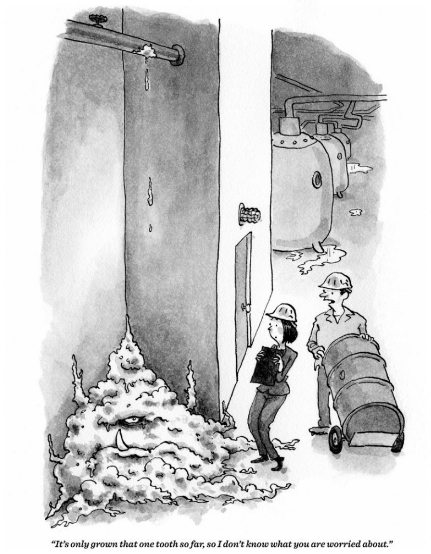 The October Leadership Lunch and Learn brought together participants from across the
state to discuss “When Everyone Leads: How the Toughest Challenges Get Seen,” co-authored by Ed O'Malley
and Julia Fabris McBride. This month's event was hosted by Karl Bradley, a leadership
team development expert at the Extension Foundation. Bradley delivered a fun and energetic
presentation, full of insightful observations, captivating the audience with vivid
stories and practical reflections.
The October Leadership Lunch and Learn brought together participants from across the
state to discuss “When Everyone Leads: How the Toughest Challenges Get Seen,” co-authored by Ed O'Malley
and Julia Fabris McBride. This month's event was hosted by Karl Bradley, a leadership
team development expert at the Extension Foundation. Bradley delivered a fun and energetic
presentation, full of insightful observations, captivating the audience with vivid
stories and practical reflections.
Guiding participants to reflect on the true meaning of leadership, setting the stage for a lively discussion. The book argues that leadership is not the exclusive domain of those with titles or positions of authority, but something everyone can practice. Bradley enthusiastically shared this perspective, emphasizing that many organizations face challenges far too complex for any individual to handle alone. Bradley explained that the core idea of the book is that leadership is an action, not a title. This shift in perspective encourages everyone to reflect on their role and consider where they can contribute.
Bradley elaborated on how the author defines two types of challenges: technical challenges and adaptive challenges.
- Technical challenges can be solved using existing knowledge, expertise, or systems.
- Adaptive challenges, on the other hand, require learning new knowledge and often involve changes in values, beliefs, and behaviors.
Identifying the Gap and Taking Action
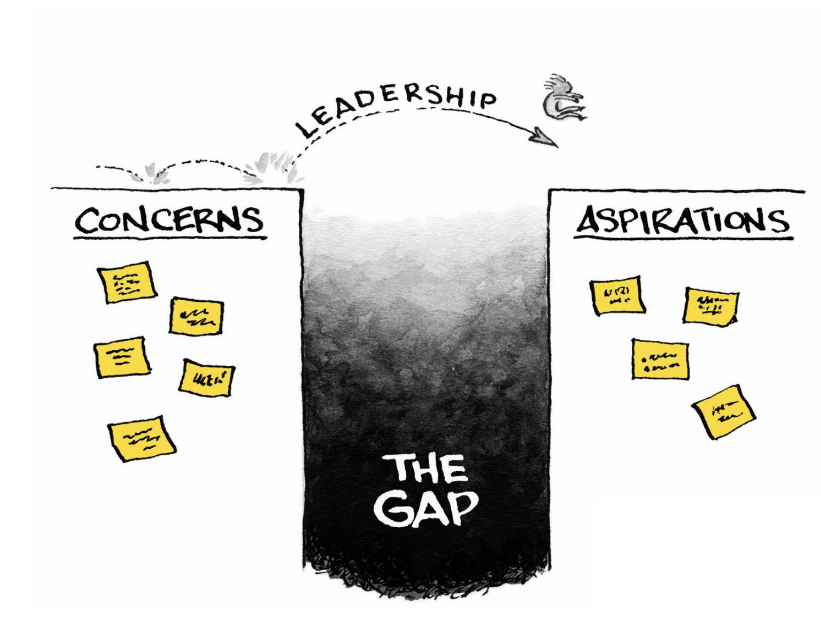
Using the book’s five-part framework, Bradley walked participants through each stage of the leadership process. The first step is identifying the gap between where things are now and where they need to be. This gap represents the difference between current reality and the desired future. Leadership begins with acknowledging that gap and taking action to close it. Noting that dissatisfaction with the present often becomes the spark that ignites meaningful progress and inspires people to act.
Attention then turned to the barriers that can prevent change. Many people resist progress, not because they dislike change, but because they fear what might be lost along the way. Bradley encouraged participants to see resistance as a natural human response to loss and to lead with empathy and understanding. Another common barrier, the quick fix, can also derail progress. When teams apply temporary or technical solutions to deep adaptive challenges, the problem usually returns. Genuine progress requires patience, learning, and collaboration over time.
Giving Yourself Permission to Lead and Managing the Heat
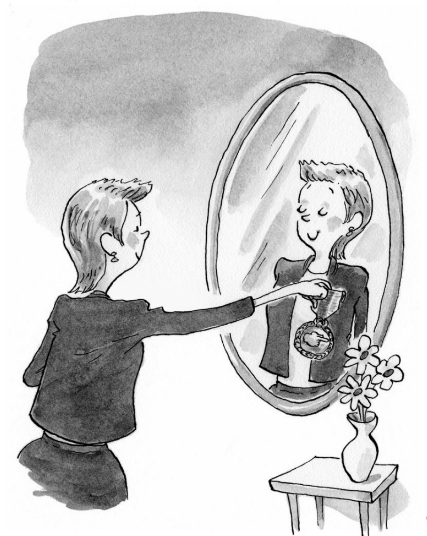
One of the most engaging parts of the session focused on the idea of “self-authorization.” This concept challenges individuals to give themselves permission to lead, regardless of job title or position. Bradley explained that leadership is not about taking control or directing others. It is about recognizing personal influence and using it to help teams move forward. Participants were encouraged to reflect on their own opportunities to lead and to recognize moments when they might be waiting for permission that will never come.
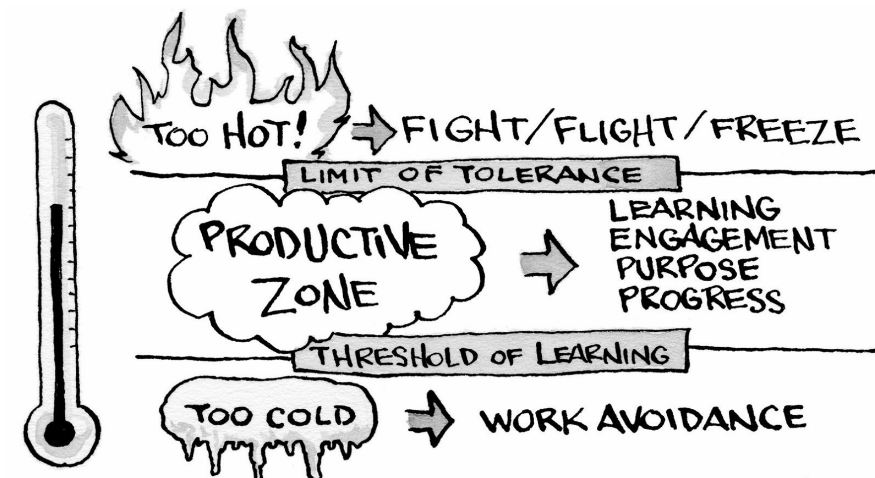
Another central theme of the book is learning how to “use the heat.” The authors describe heat as the energy that comes with change. Too little heat leads to complacency and avoidance of tough conversations, while too much can cause stress, burnout, or conflict. Leadership involves maintaining the productive zone in between, where tension motivates progress without overwhelming people. Bradley illustrated this with the image of making popcorn. With too little heat, nothing changes. With too much, everything burns. But with the right balance, transformation happens.
Throughout the presentation, Bradley kept the conversation engaging with relatable examples and moments of humor. Leadership, he explained, often feels risky because it involves stepping into the unknown. Yet courage is always available when we choose to take it. Leadership does not have to be dramatic or formal. It often takes place in everyday actions, through listening, asking thoughtful questions, or showing support to a colleague.
In the final section of the review, three leadership practices were highlighted that anyone can start using right away.
- Ask powerful questions that open dialogue and help uncover the real issues at hand.
- Make multiple interpretations, which means viewing a situation from several perspectives before forming conclusions.
- Act experimentally, taking small steps to test ideas and learning from the results.
According to Bradley, when more people within an organization begin to practice these actions, collective progress becomes more consistent and sustainable.
Leading from Where You Are
As the session ended, participants were reminded that leadership belongs to everyone. It does not rely on hierarchy but on the willingness to take responsibility for creating progress. The book encourages individuals to notice opportunities to lead in their daily work, whether through sparking a new idea, supporting a teammate, or helping others navigate uncertainty.
When Everyone Leads challenges the traditional view of leadership and replaces it with one grounded in shared responsibility, courage, and collaboration. The book offers a roadmap for building cultures where leadership is distributed, and progress is shared. As Bradley concluded, meaningful change happens when people choose to lead from where they are and help others do the same.
About the Reviewer
A bold voice for purpose-driven leadership, Karl Bradley is the kind of thinker who fuses heart, hustle, and humanity. He’s a storyteller with strategy, a facilitator of transformation, and a champion for inclusive, emotionally intelligent leadership. Whether he's building momentum for your leadership development program, sharpening communication with poise, or spotlighting Ubuntu’s timeless wisdom, Bradley ignites teams, programs, and minds with presence and clarity. He doesn't just talk leadership — he lives it, with a cadence that blends conviction and a coach’s real-world fire.
As the leadership and team development specialist for the Extension Foundation, his job is to influence the 32,000 Cooperative Extension Service professionals to create meaningful experiences for the people of our nation. He does this through individual and team coaching, grant support, and membership offerings. Above all, he is a proud spouse and a father of two amazing humans!