Posts
Contact
Lisa Davis
Program Associate-Leadership
Phone: 501-671-2260
Email: ldavis@uada.edu
University of Arkansas Division of Agriculture
Cooperative Extension Service
2301 S. University Avenue
Little Rock, AR 72204
From Rainstorms to Revelations: LeadAR Class 21’s First Day in Northwest Arkansas
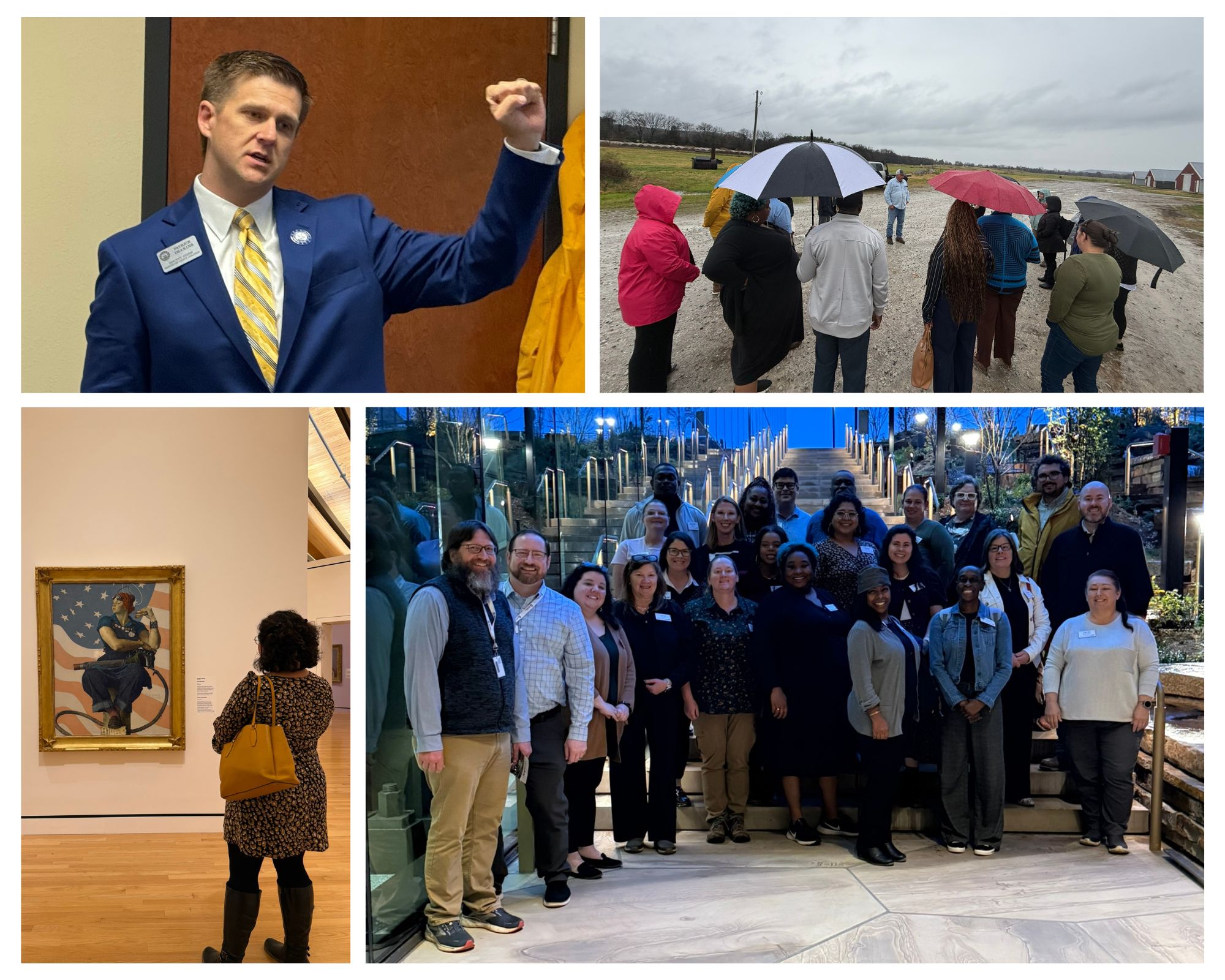 Our first day in northwest Arkansas was full of adventure—and rain. We needed the
moisture, but it certainly could have picked a better time. Still, like the Fellowship
leaving Rivendell for Mordor, we carried on.
Our first day in northwest Arkansas was full of adventure—and rain. We needed the
moisture, but it certainly could have picked a better time. Still, like the Fellowship
leaving Rivendell for Mordor, we carried on.
Our first stop was the Center for Arkansas Farms and Food (CAFF) at the Milo J. Shult Agricultural Research and Extension Center. Although the rain kept us from touring the facilities, we had the chance to hear from Director Heather Friedrich about CAFF’s mission: increasing the number of successful farms and farmers in Arkansas and promoting sustainable production practices. Strengthening local food production is essential for our state’s food security, and CAFF is doing the work to make it happen. We also heard from Dr. Matt Bertucci, who focuses on soil management and sustainable agriculture. He shared updates on his composting and soil-health research, rounding out our visit.
Washington County Judge Patrick Deakins welcomed us next. Despite the title, the county judge position in Arkansas is more administrative rather than judicial. Deakins spoke about the rapid growth in northwest Arkansas and the challenges that come with it. He works closely with cities across the county to improve the quality of life for Washington County residents and to align local efforts toward shared goals.
From there, we headed to the Washington County Farm Bureau for lunch and a warm welcome from the local staff. They explained what they’re working on with farmers in the area and how it connects to state and national Farm Bureau efforts.
Next was the Jeff Marley Poultry Farm—fortunately, the rain had lightened up. The Marleys grow for George’s Inc. Like many operations in the poultry industry, their farm is part of a vertically integrated system, meaning the parent company oversees nearly every stage: hatching, distribution, feed, and processing. While we were there, they received a new shipment of chicks—about 20,000 per house. The birds will stay there until they reach roughly eight pounds, at which point they’ll be transported to a processor. Modern poultry houses are highly advanced; computers control temperature and humidity to ensure optimal growth, and farmers receive alerts on their phones if something goes wrong. The level of science and technology in food production never ceases to impress me, especially in areas of agriculture I haven’t personally worked in before.
One of the most anticipated stops of the day was the Alice Walton School of Medicine
(AWSOM). This brand-new, state-of-the-art facility aims to change how future physicians
are trained and to bridge the gap between patients and providers. The school’s design
blends nature and art with science, creating a unique learning environment.
During the tour, we explored their advanced simulation space, complete with lifelike
practice mannequins capable of simulating everything from amputations to heart attacks.
We learned that AWSOM is intentionally taking a different approach from traditional
medical schools. For example:
- The first five cohorts will pay no tuition, thanks to the foundation.
- Students will get earlier, more frequent hands-on training instead of spending the first two years primarily in the classroom.
- The program aims to keep more doctors in Arkansas by placing students in residency programs throughout the state.
This stop also resonated with me on a personal level. As someone who grew up with an autoimmune condition, I often felt unheard by doctors who rushed to treat symptoms without addressing the whole picture. Some treatments even caused additional problems down the road. Dr. Lance Bridges, the department chair and medical education professor, explained that they plan to bring real patients into discussions with students to talk openly about their healthcare journeys—physically and mentally. That approach feels incredibly important, and I’m eager to see how it shapes the next generation of physicians.
Our final stop was another Walton Family project: Crystal Bridges Museum of American Art. It was my first visit, and all I can say is wow. I may not know much about art, but the space and the exhibits were stunning. We even toured the temporary exhibition “Get in the Game: Sports, Art, Culture,” thanks to a classmate who works at the museum and secured tickets for us. The connections between sports and art were a fascinating contrast I hadn’t thought about before. I’ll definitely have to come back for a longer visit.
We ended the day with a good meal and, as always, long conversations with classmates in the hotel lobby. Every trip with this group reminds me how much this experience means to me—despite my initial apprehension, the people and the opportunities have become truly important.
I’ll end with one of my favorite quotes from one of my favorite stories:
“It’s a dangerous business, Frodo, going out your door. You step onto the road, and
if you don’t keep your feet, there’s no telling where you might be swept off to.”