Posts
Contact
Lisa Davis
Program Associate-Leadership
Phone: 501-671-2260
Email: ldavis@uada.edu
University of Arkansas Division of Agriculture
Cooperative Extension Service
2301 S. University Avenue
Little Rock, AR 72204
LeadAR Class 21: Looking at the Forest, Not Just the Trees
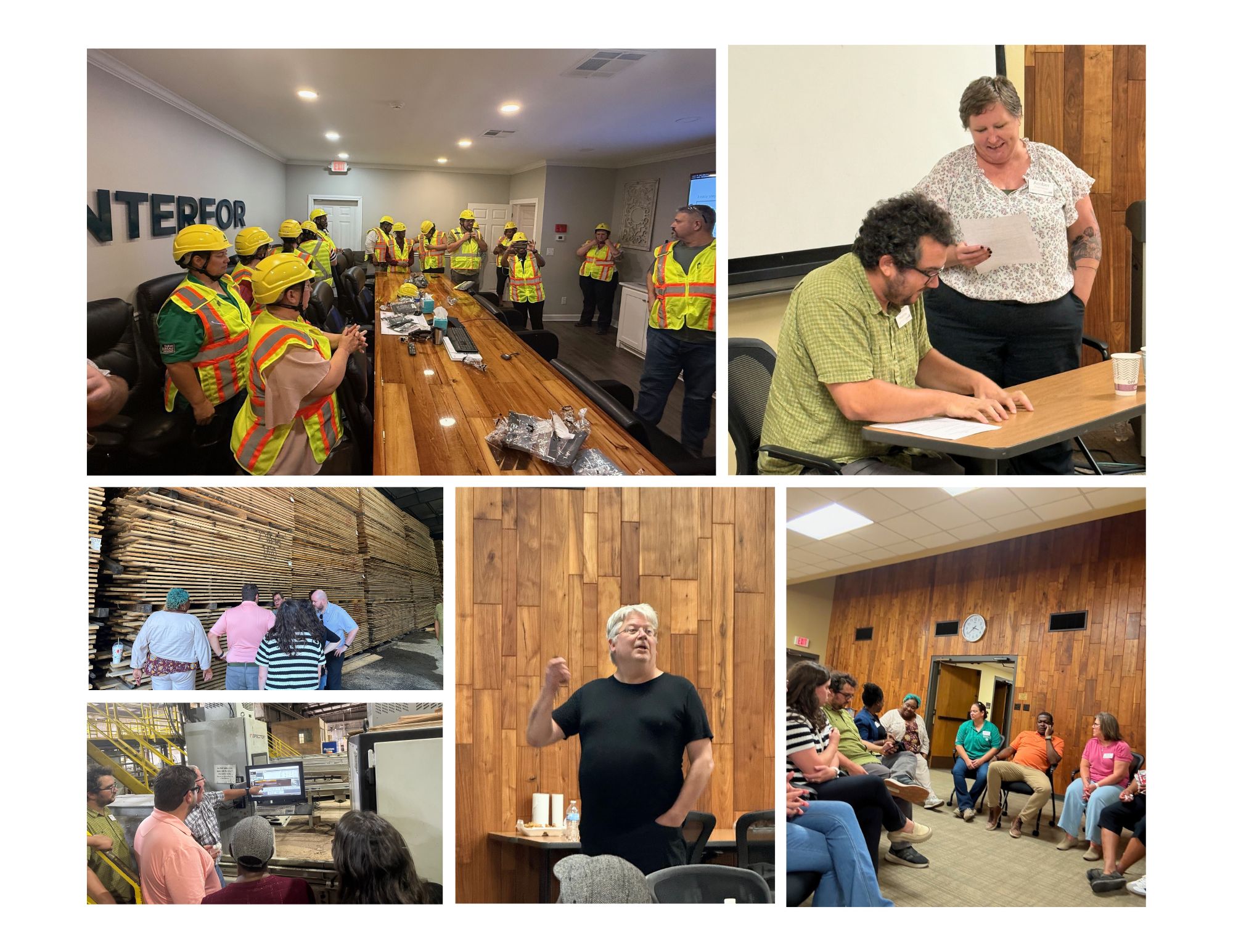 The July 2025 LeadAR Seminar took place in Monticello, Arkansas, with a focus on Forestry.
Hosted at the University of Arkansas at Monticello (UAM), the day was packed with
expert speakers, industry tours, and thought-provoking discussions. As someone who
works closely with youth in outdoor settings, I was eager to explore how forestry
intersects with leadership, sustainability, and education. What I experienced was
far more than a lesson in trees—it was a deep dive into the systems, people, and innovations
shaping Arkansas’s forestry future.
The July 2025 LeadAR Seminar took place in Monticello, Arkansas, with a focus on Forestry.
Hosted at the University of Arkansas at Monticello (UAM), the day was packed with
expert speakers, industry tours, and thought-provoking discussions. As someone who
works closely with youth in outdoor settings, I was eager to explore how forestry
intersects with leadership, sustainability, and education. What I experienced was
far more than a lesson in trees—it was a deep dive into the systems, people, and innovations
shaping Arkansas’s forestry future.
Day Two: Reflections on the Experience
Main Ideas
Dr. Sam Boyster kicked the morning off with an interactive session on Leadership Communication, emphasizing authenticity, clarity, and the importance of listening—skills that transcend industries and are essential in any leadership role. Based on our mock screenplays, cats may not be a good pet for this class…
Later in the day, we toured the Interfor Sawmill and Maxwell Hardwood Flooring, where we saw the scale and precision of modern timber processing. The attention to detail and making the most out of every part of the tree was impressive.
Dr. Peter MacKeith, Dean of the Fay Jones School of Architecture and Design, introduced us to Mass Timber Construction. His presentation, featuring projects like the new Walmart headquarters and Anthony Timberlands Center, showcased how Arkansas is leading in innovative, sustainable building practices.
New Perspectives
This experience broadened my understanding of forestry as a dynamic, multifaceted industry that blends science, technology, policy, and design. I was especially struck by how mass timber construction is not only environmentally responsible but also aesthetically beautiful and structurally sound. It challenged me to think about how natural resources can be used in ways that honor both function and form.
Personal Relevance
As the AR 4-H Camping Coordinator, I’m constantly looking for ways to connect youth with the natural world. This seminar reinforced the importance of teaching young people not just to appreciate nature, but to understand the systems that support it. Forestry is a perfect example of this—where biology, economics, and ethics intersect. I left Monticello inspired to integrate more forestry education into our camp programs, helping youth see the forest as a living classroom full of opportunity and responsibility.
Actionable Insights
One of the most practical takeaways for me was the emphasis on communication—both from Dr. Boyster’s session and throughout the day. Whether we’re leading a team, teaching youth, or advocating for sustainable practices, how we communicate matters.
Engagement
The most impactful moment for me was the tour of Maxwell Hardwood Flooring. Seeing the craftsmanship, care, and innovation that goes into each plank of flooring was eye-opening. They placed great importance on their community and the people in it. It reminded me that leadership isn’t just about vision—it’s about execution, integrity, and people.
Connections
Throughout the session, there were meaningful conversations about Forestry and where it is headed and the impact it has on the environment and the state. Each person brought a unique lens to the topic of forestry.
Conclusion
The Monticello seminar was a powerful reminder that leadership requires us to see the big picture. Forestry, with its blend of tradition and innovation, economy and ecology, is a perfect metaphor for this kind of thinking. I left the day not only more informed but more inspired—to lead with intention, to teach with purpose, and to help others see the forest, not just the trees.