Preventing Blossom End-Rot in Arkansas Tomatoes
Searcy, Ark. –
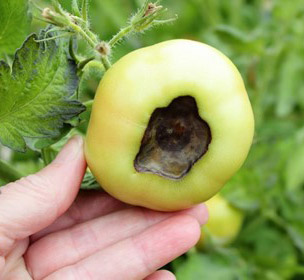 Blossom-end rot is a common issue in Arkansas gardens, affecting tomatoes and other
vegetables. This disorder is caused by a calcium deficiency in the fruit, often due
to inconsistent moisture levels, low soil calcium, or root damage. Anything that interferes
with calcium uptake by the plant’s roots can lead to this condition.
Blossom-end rot is a common issue in Arkansas gardens, affecting tomatoes and other
vegetables. This disorder is caused by a calcium deficiency in the fruit, often due
to inconsistent moisture levels, low soil calcium, or root damage. Anything that interferes
with calcium uptake by the plant’s roots can lead to this condition.
Recognizing Blossom-End Rot
Blossom-end rot appears as light tan lesions that darken into sunken, leathery spots, typically at the bottom of the fruit. In some cases, spots may form on the sides as well. Over time, the affected areas may develop dry rot and black mold.
Prevention Strategies
Since Arkansas soils can vary—ranging from sandy to heavy clay—conducting a soil test before planting is the best way to determine if lime or calcium amendments are needed. The University of Arkansas Cooperative Extension Service offers soil testing to help gardeners assess pH and nutrient levels.
To prevent blossom-end rot:
- Maintain proper soil pH (6.0–7.0) by applying lime as needed based on soil test results.
- Ensure consistent moisture by watering deeply and regularly, especially during Arkansas’s hot, dry summers. Mulching around plants helps retain soil moisture and reduce temperature fluctuations.
- Avoid excessive nitrogen fertilization, particularly ammonium-based fertilizers, which can compete with calcium uptake. Use balanced fertilizers instead.
- Choose tomato varieties suited to Arkansas’s climate that may be more resistant to stress-related disorders.
Managing Blossom-End Rot
Once blossom-end rot appears, managing it becomes more challenging. If inconsistent watering is the issue, increasing irrigation can help. However, if low soil calcium or improper pH is the cause, the problem is harder to correct mid-season. Foliar calcium sprays are usually ineffective because calcium moves slowly within the plant. Instead, applying calcium chloride or calcium nitrate to the soil—either as a side dressing or through drip irrigation—can be more beneficial.
Common Mistakes to Avoid
- Over-fertilizing with high-nitrogen or ammonium-based fertilizers, which can reduce calcium availability.
- Allowing soil moisture to fluctuate too much, leading to poor nutrient uptake.
- Ignoring soil test recommendations, which can result in incorrect fertilization practices.
Additional Resources
For soil testing and gardening advice, contact your local Arkansas Cooperative Extension Office or visit www.uaex.uada.edu.
By preparing soil properly and ensuring a steady supply of water and nutrients, Arkansas gardeners can reduce the risk of blossom-end rot and enjoy a healthier tomato harvest.
By Sherri Sanders
County Extension Agent - Agriculture
The Cooperative Extension Service
U of A Division of Agriculture
Media Contact: Sherri Sanders
County Extension Agent - Agriculture
U of A Division of Agriculture
Cooperative Extension Service
2400 Old Searcy Landing Road Searcy AR 72143
(501) 268-5394
ssanders@uada.edu
The Arkansas Cooperative Extension Service is an equal opportunity institution. If
you require a reasonable accommodation to participate or need materials in another
format, please contact your County Extension office (or other appropriate office)
as soon as possible. Dial 711 for Arkansas Relay.
Pursuant to 7 CFR § 15.3, the University of Arkansas Division of Agriculture offers
all its Extension and Research programs and services (including employment) without
regard to race, color, sex, national origin, religion, age, disability, marital or
veteran status, genetic information, sexual preference, pregnancy or any other legally
protected status, and is an equal opportunity institution.