Fruit Thinning for Healthier Trees
 Searcy, Ark. –
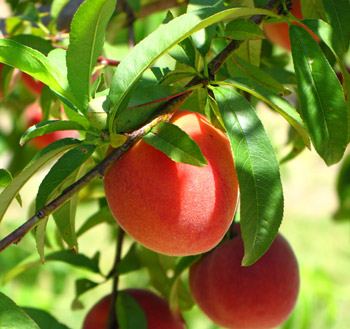
Fruit trees grown under favorable conditions in Arkansas often set more fruit than they can properly develop. To ensure healthy trees and quality fruit, fruit thinning is a critical practice. Thinning is particularly beneficial for apples, pears, nectarines, plums, and peaches—common fruit trees grown in home orchards across the state. However, many homeowners are hesitant to remove excess fruit, not realizing the long-term benefits.
Why Should You Thin Fruit?
- Improved Fruit Size and Quality – Thinning allows the remaining fruit to develop adequate size and quality. When too many fruits are left on a tree, they compete for limited nutrients and water, resulting in smaller, lower-quality fruit.
- Promotes Consistent Annual Crops – Overloaded trees can deplete energy reserves, leading to poor fruit bud development for the following year. This often results in biennial bearing, where a heavy fruiting year is followed by a year with very little yield. Thinning ensures a more consistent crop from year to year.
- Prevents Limb Breakage – Arkansas experiences strong storms, and fruit-laden limbs are more susceptible to breakage under high winds or heavy rain. Reducing excess fruit helps protect branches from damage.
- Reduces Disease and Pest Issues – When fruit clusters are too close together, they create an environment where pests and diseases thrive. Arkansas’s humid climate makes fruit trees especially vulnerable to fungal diseases like brown rot and scab. Proper thinning improves air circulation, reducing the risk of infections.
When and How to Thin Fruit
Timing:
- Begin hand thinning when the fruits are about ½ inch in diameter (typically 2-4 weeks after petal fall in Arkansas, depending on the fruit type and weather conditions).
- The earlier thinning is done—ideally within the first 20-30 days after petal fall—the more effective it will be in preventing biennial bearing and promoting fruit development.
Method:
- Start at one end of a branch and systematically remove excess fruit.
- Leave one fruit every 6 to 8 inches along the branch.
- Prioritize keeping the largest, healthiest-looking fruit and remove small, damaged, or misshapen ones.
- If two or more fruits are clustered together, retain only one.
For dwarf fruit trees, remove additional fruit beyond these recommendations. Dwarf trees, which are popular in backyard orchards, tend to set heavier crops at an early age, making them more prone to structural damage.
Additional Considerations for Arkansas Growers
- Pruning and Thinning Go Hand in Hand – Annual pruning is the first step in controlling fruit load. Without proper pruning, thinning will not be as effective. Remove excess branches in late winter or early spring to ensure better fruit distribution and reduce overcrowding.
- Orchard Floor Sanitation – Thinned fruit should be collected and removed from the orchard floor. Fungal pathogens, such as brown rot (Monilinia fructicola), overwinter on decaying fruit and leaves. Disposing of fallen fruit and pruned wood promptly reduces disease pressure in Arkansas’s warm, humid climate.
- Supporting Heavy Branches – As fruit matures, young trees may need additional support. If you do not wish to remove more fruit, use poles or props to support limbs and prevent breakage.
By practicing proper fruit thinning, Arkansas growers can enjoy larger, healthier fruit while maintaining the long-term productivity of their trees. With early action, consistent pruning, and orchard sanitation, your fruit trees will thrive for years to come.
By Sherri Sanders
County Extension Agent - Agriculture
The Cooperative Extension Service
U of A Division of Agriculture
Media Contact: Sherri Sanders
County Extension Agent - Agriculture
U of A Division of Agriculture
Cooperative Extension Service
2400 Old Searcy Landing Road Searcy AR 72143
(501) 268-5394
ssanders@uada.edu
The Arkansas Cooperative Extension Service is an equal opportunity institution. If
you require a reasonable accommodation to participate or need materials in another
format, please contact your County Extension office (or other appropriate office)
as soon as possible. Dial 711 for Arkansas Relay.
Pursuant to 7 CFR § 15.3, the University of Arkansas Division of Agriculture offers
all its Extension and Research programs and services (including employment) without
regard to race, color, sex, national origin, religion, age, disability, marital or
veteran status, genetic information, sexual preference, pregnancy or any other legally
protected status, and is an equal opportunity institution.