Posts
Contact
Lisa Davis
Program Associate-Leadership
Phone: 501-671-2260
Email: ldavis@uada.edu
University of Arkansas Division of Agriculture
Cooperative Extension Service
2301 S. University Avenue
Little Rock, AR 72204
iLEAD Cohort IV Explores Northeast Arkansas
From Harrisburg, to Newport, to Batesville, iLEAD Cohort IV traveled northeast Arkansas to learn about the extension and research being done in the area. We asked two iLEAD participants to share their experiences.
Day One
By: Brandon Mathews, Program Associate-Economic Development
If you ask ChatGPT what percentage of U.S. rice production comes from Arkansas, you may be surprised to hear the Natural State ranks number producing 40%. While the first number is correct, the second number is not, but more on that later. Cohort IV of iLEAD traveled to the newly constructed Northeast Rice Research and Extension Center (NERREC) which opened its doors to the public on August 30 with nearly 400 in attendance. Dr. Tim Burcham, NERREC center director, led a tour of the facilities and its offerings.
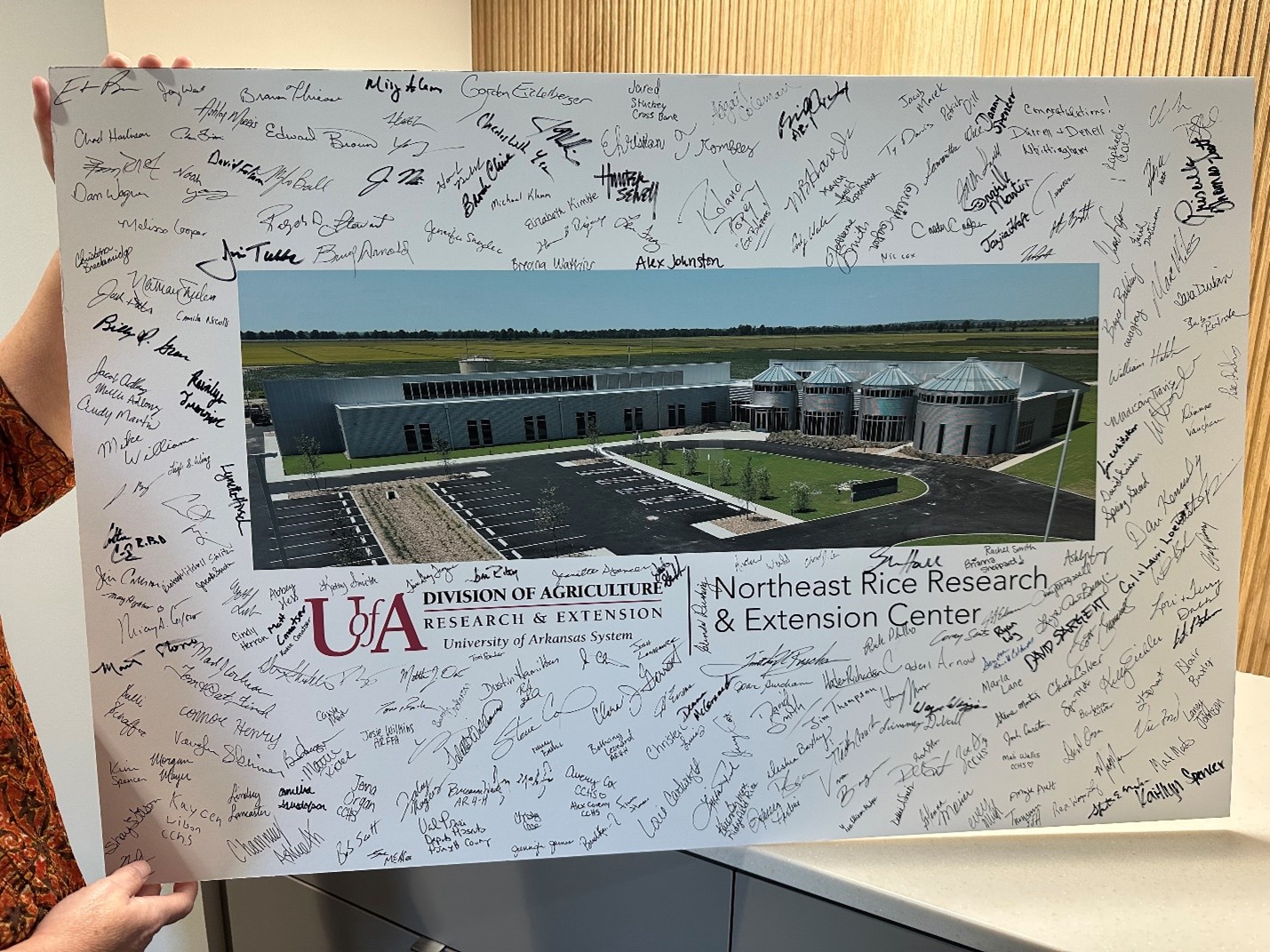 The facility is the first new land-grant rice research and extension center in 100
years. Its construction was funded by the University of Arkansas Division of Agriculture
(UADA), a Arkansas Rice Research grant, and Promotion Board Tariff Rate Quota funds
from a United States - Columbia trade promotion agreement specially directed to rice
research. In fact, no checkoff funds were used in the center's construction. In addition,
the $18.5 million center was also supported by industry partners through corporate
and philanthropic gifts. You don’t have to walk far to see the names of individuals,
families, and businesses that made the beautiful facility possible such as the beautiful
silos.
The facility is the first new land-grant rice research and extension center in 100
years. Its construction was funded by the University of Arkansas Division of Agriculture
(UADA), a Arkansas Rice Research grant, and Promotion Board Tariff Rate Quota funds
from a United States - Columbia trade promotion agreement specially directed to rice
research. In fact, no checkoff funds were used in the center's construction. In addition,
the $18.5 million center was also supported by industry partners through corporate
and philanthropic gifts. You don’t have to walk far to see the names of individuals,
families, and businesses that made the beautiful facility possible such as the beautiful
silos.
What makes the 20,000 square foot NERREC facility truly amazing is its capacity to conduct research and community outreach. The facility has already hosted four rice demo days for producers and industry partners and has received hundreds of children from Arkansas and out of state to learn about rice and agriculture. The day after our visit a group of 58 students and parents were coming from Idaho due to information online about the center. The building also includes a greenhouse, boardroom for smaller meetings, and a 300-seat conference center with a fully equipped teaching kitchen that also serves as a demo kitchen.
So back to the discrepancy in rice production. According to Burcham, half of all U.S. rice production comes from Arkansas, and half of that half (25%) comes from just handful of surrounding counties. A “traditional” Google Search will back up Burcham’s remarks. So why did two internet searches for the same information produce different results?
One of the more fascinating aspects about the tour was an impromptu discussion about artificial intelligence (A.I.) and sharing research. UADA’s mission is to strengthen agriculture, communities, and families by connecting trusted research to the adoption of best practices. Burcham shared that the Division has a challenge and opportunity with A.I. to provide information to producers and farmers quickly, accessibly, and accurately. The current limitations of large language models like ChatGPT and others are that the models are trained on a fixed set of data that looks backward. While this produces some incredible historical information, it can lag in producing the most recent and trusted information.
As a demonstration, Burcham conducted an A.I. search app to ask what the most common type of rice produced in Arkansas is. The result? It cited the most common variety from nearly a decade ago referencing private industry and older research articles published by UADA. While this search result may not be inherently harmful, and most producers, researchers, and industry leaders know the correct answer, the example highlights an opportunity for UADA and similar institutions to find solutions for disseminating the most up to date information quickly, reliably, and factually. This notion ties well into the words of Dr. John Anderson, UADA extension director, at the Southern Agricultural Economics Association earlier this year.
“Universities should view the current moment as a unique opportunity to reassert our traditional role as objective, unbiased arbiters of reliable information," Anderson said.
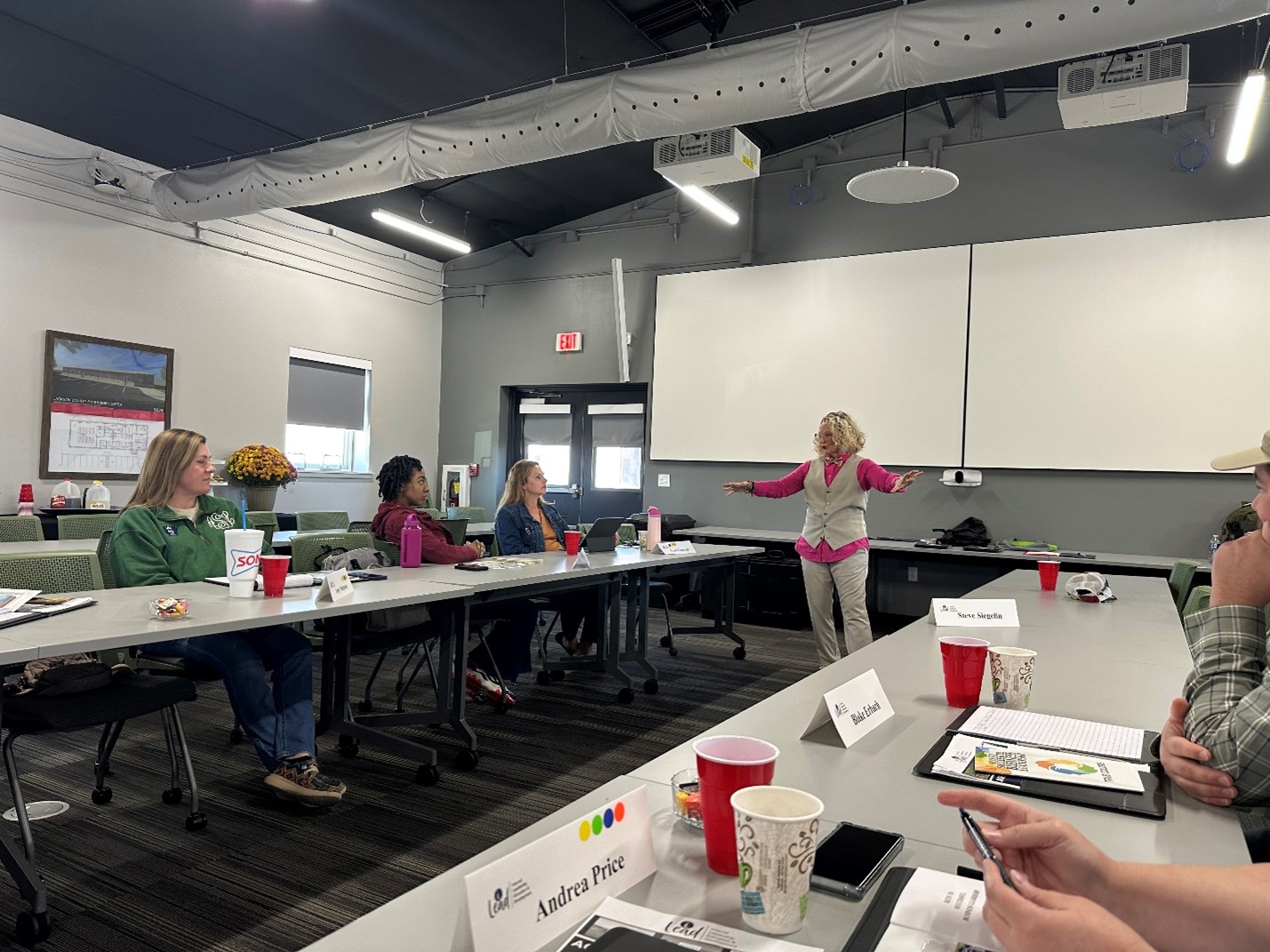 After an hour-long drive, the iLEAD Cohort traveled to the Jackson County Extension
Center in Newport for lunch and a deeper dive into True Colors with Vanessa Lewis,
a program associate from the Community, Professional and Economic Development team
at UADA. The group explored ways to incorporate different learning opportunities in
their programming and research that caters to other’s preferred learning styles—or
True Colors.
After an hour-long drive, the iLEAD Cohort traveled to the Jackson County Extension
Center in Newport for lunch and a deeper dive into True Colors with Vanessa Lewis,
a program associate from the Community, Professional and Economic Development team
at UADA. The group explored ways to incorporate different learning opportunities in
their programming and research that caters to other’s preferred learning styles—or
True Colors.
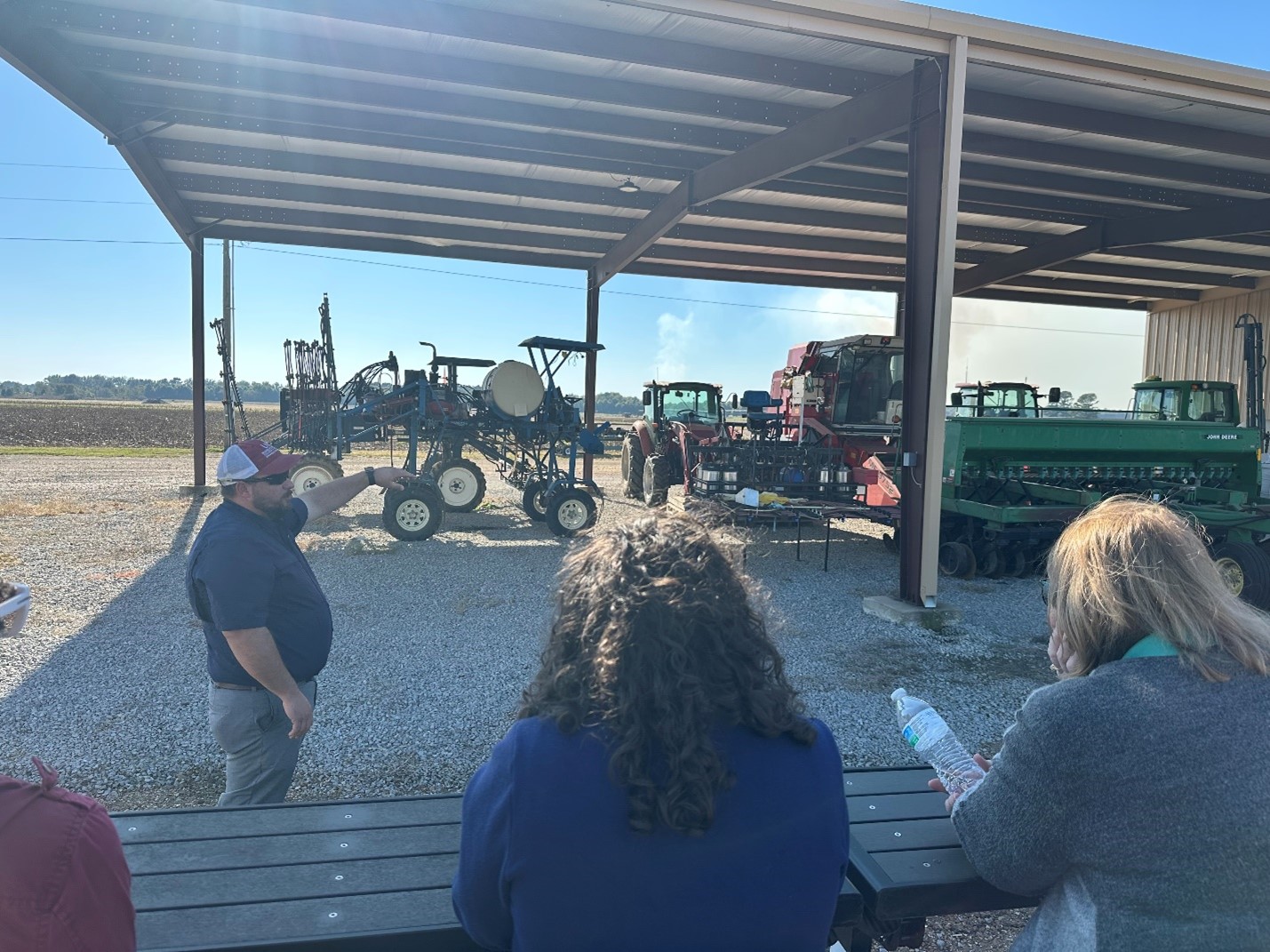
From there, the group toured the 450-acre grounds which include 350 acres of tillable land. The former World War II era airbase now hosts research projects focused on corn, soybeans, peanuts, rice, wheat, and most recently several fruit states as mentioned by Matthew Davis, staff chair for the extension office which is also onsite. The group saw a variety of equipment and research plots employed.
 After touring the farm, Davis challenged the cohort to think about one positive attribute
for UADA and one thing the cohort would like to change. The group was in consensus
that UADA provides a breadth of programming and research while also maintaining flexibility
for staff and faculty to explore areas of interest and take ownership of their programs
and research. In a similar fashion and in line with remarks from the previous iLEAD
session, the group acknowledged there is more work to be done helping UADA better
articulate its identity to the public in this digital age. Nearly everyone in the
group has encountered, “I didn’t know that was something you all did. I wish I knew
that sooner.”
After touring the farm, Davis challenged the cohort to think about one positive attribute
for UADA and one thing the cohort would like to change. The group was in consensus
that UADA provides a breadth of programming and research while also maintaining flexibility
for staff and faculty to explore areas of interest and take ownership of their programs
and research. In a similar fashion and in line with remarks from the previous iLEAD
session, the group acknowledged there is more work to be done helping UADA better
articulate its identity to the public in this digital age. Nearly everyone in the
group has encountered, “I didn’t know that was something you all did. I wish I knew
that sooner.”
At the end of the day, iLEAD Cohort IV’s call to action was Session 2, Day 1 could be summed in finding ways through leadership to close the gap in knowledge learned and knowledge applied, be that through technology like ChatGPT, demonstrations through state-of-the-art facilities, and intentionally critiquing our process for teaching and education to reach the broadest audience possible.
Day Two
By Linda Pate, Departmental Administrative Manager, Biological and Agricultural Engineering
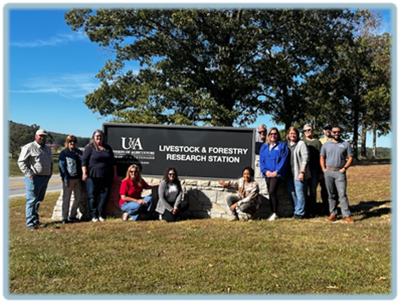
iLead Cohort IV convened at Batesville Livestock and Forestry Research Station for their second day of visiting three research stations in northeast Arkansas in two days.
The drive to the Batesville research station is a beautiful drive. As you drive to the station, you can see the changing of the season, starting with the colors in the trees.
Once at the station, the cohort worked on active listening and communication in a
session led by Dr. Julie Robinson and Dr. Steve Siegelin. Being an active listener
and having effective communication skills are two of the many qualities that make
a good leader and are skills the cohort is working on strengthening.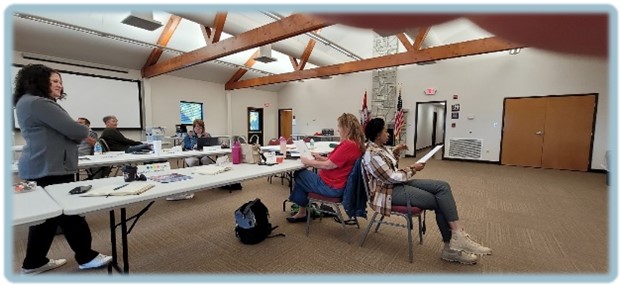
The resident director, Dr. Shane Gadberry, spoke to the group and gave a station history and tour. Gadberry shared that the station has a total of 3,042 acres. Of those acres, 1,250 are for the beef cattle unit and 1,750 acres are for the forestry unit. The station runs a 100% fall calving operation with 300 lactating cows, 100 replacement females and 135 steers.
The group moved outside to take a tour of the station, and Dr. Kelly Loftin spoke to the group about his research on the surveillance of the Asian Long-horned Tick on cattle at the station and surrounding areas. After Loftin was done sharing his research with the group, they all boarded the trailer for the farm tour and were treated to an old-fashioned hayride.
Their first stop: The research lab of Assistant Professor Dr. Jason Davis, extension's
remote sensing and pesticide application specialist. Davis demonstrated how farmers
can use drones in various ways to help with tasks that might be too dangerous for
them to do themselves. 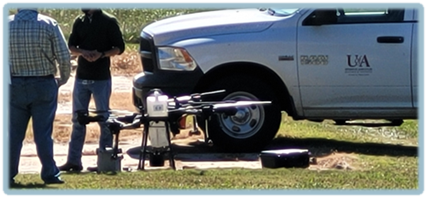
First, he showed how to use drones to spray pesticides in areas that are too hazardous for crop dusting planes to get to. Next, Davis showed the group how to use drones to fly over a field and take one-inch precision pictures of different spots in the field for crop sensing without having to walk the field. The technology and uses of drones are growing at a fast pace in agriculture.
 The hayride ended with everyone getting to see the baby calves. As the trailer approached
the baby calves, the mothers seemed very protective and gave the group the 'I dare
you' stare to get off the trailer and approach them. Everyone decided it was best
to observe the baby calves from the trailer and avoid the protective mothers. The
group safely returned to the station building without any mishaps.
The hayride ended with everyone getting to see the baby calves. As the trailer approached
the baby calves, the mothers seemed very protective and gave the group the 'I dare
you' stare to get off the trailer and approach them. Everyone decided it was best
to observe the baby calves from the trailer and avoid the protective mothers. The
group safely returned to the station building without any mishaps.
Once back at the station, the group had a brief wrap-up and left to go home after a busy but great trip of visiting three research stations in two days.
To learn more information about the iLEAD program, please reach out to Julie Robinson, jrobinson@uada.edu, or Lisa Davis, ldavis@uada.edu.