Below are some basic facts about forages in Arkansas:
Forages provide the main feed source for cattle, horses, small ruminants, and many
species of wildlife.
The primary forages are tall fescue and bermudagrass.
Forages such as annual ryegrass, many species of clover, small grains, and others
are also grown across the state.
Forage productivity varies widely from the limestone and chert-based soils of the
northern Ozarks, the shale/sandstone derived soils of the Ouachita Mountains, the
Gulf Coastal Plain soils of south Arkansas, and the Delta soils of eastern Arkansas.
Cool season forages such as tall fescue and clover are dominant in north Arkansas
and parts of the Ouachita Mountains, while warm season forages such as bermudagrass
and bahiagrass are dominant in southern Arkansas.
A forage system may include pasture, hay, silage, crop residues or any combination
of these.
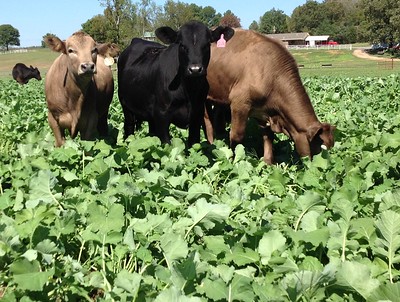
Grazing is the most economical method for harvesting forages so well-managed pasture
is a very important feed source.
When sufficient forage is not available for grazing, cattle are fed stored forages
such as hay or silage.
Machine harvesting of forages for hay or silage adds expense, but also adds flexibility
because harvested forages can be stored for later use or transported for feeding in
other locations.
Managing pastures for different seasonal forage requirements:
Different livestock operations require different seasonal pasture strategies for optimum
animal production. Spring-calving herds have different seasonal forage requirements
than fall-calving herds.
A good forage program includes plans to ensure adequate pasture and hay quantity and
quality to match the animal requirements during each season.
Spring and Fall Forages for Pastures
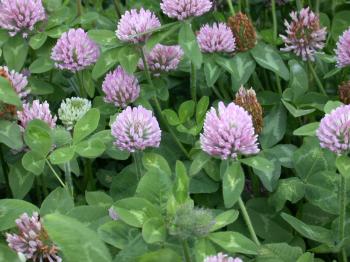
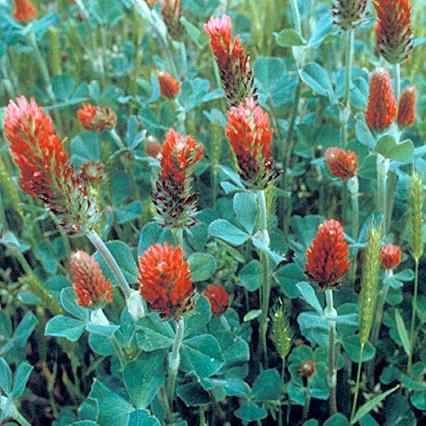
Red Clover
Spring and fall forages include cool-season grasses and legumes such as clover. Cool
season grasses produce most of the annual growth during spring and fall, but are usually
dormant or unproductive during hot summer months.
About two-thirds of the annual growth of perennial cool season grasses occurs in the
spring and about one-third of the annual growth occurs during the fall. Perennial
cool season grasses grown in Arkansas include tall fescue, kentucky bluegrass, matua
bromegrass, and orchardgrass. Winter annual cool-season grasses include annual ryegrass
and small grains such as wheat, cereal rye, and oats. Commonly grown legumes include
perennial clovers like red and white clover, annual clovers like arrowleaf, crimson,
and subterranean clover, and other legumes including hairy vetch, winter peas, lespdeza,
and alfalfa.
Forages for Summer Pastures
Bahiagrass
Warm-season grasses grow rapidly during the summer months but grow very little in
spring or fall.
Warm-season grasses provide good quality, actively growing forage during the hot summer
when cool-season grasses and many legumes are dormant or unproductive. A forage program
that includes both warm-season and cool-season grass pastures will provide a more
constant forage supply over the growing season.
Typical perennial warm-season grasses grown in Arkansas include bermudagrass, bahiagrass,
dallisgrass, and johnsongrass. Some annual warm-season grasses include crabgrass,
millet (several species), and sorghum-sudan.
Where wildlife is important on the farm, native warm-season grasses are grown to provide
nesting cover and can be grazed or harvested for hay. Native warm-season grasses include
big bluestem, indiangrass, little bluestem, eastern gamagrass, and switchgrass.
Proper identification of forages and weeds is important for good pasture and hay management.
Photographs of plants and key ID features are listed to help users learn how to ID
pasture plants. Plants are sorted as Grasses, Legumes, Forbs, and Woody Plants.
Grasses
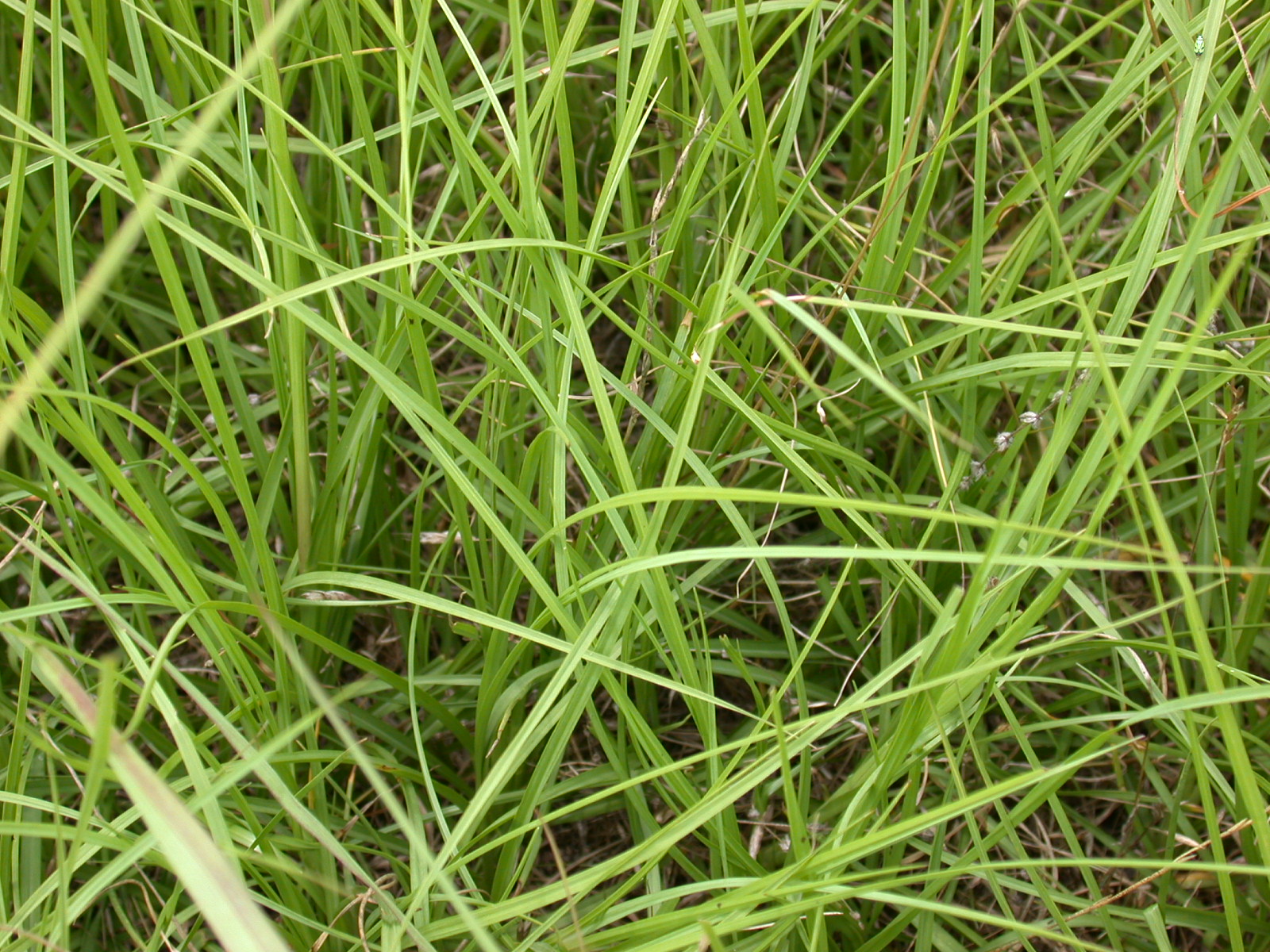
Grasses make up the forage base in hay fields and pastures across Arkansas and include
common species such as tall fescue, bermudagrass, and ryegrass.
Legumes include clovers, vetch, alfalfa, lespedeza and others. Legumes improve forage
quality and are very useful as forage and for wildlife improvement.
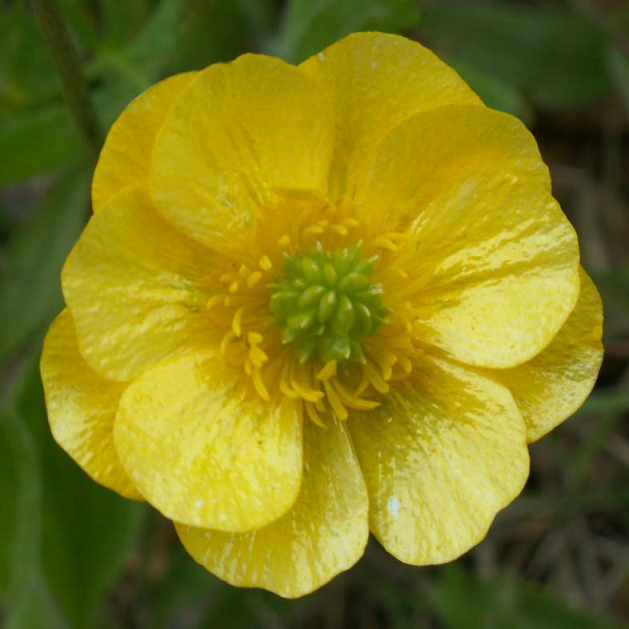
Many broadleaf plants are considered to be forbs or weeds depending on use. Many forbs
are very useful for wildlife, but have limited value as forage. Others provide good
grazing in certain situations.
Woody plants include shrubs, vines and trees.Woody plants are useful, but oak brush
in pasture is much less valuable than oak trees large enough for lumber harvest or
mast production for wildlife.