Posts
Contact
Lisa Davis
Program Associate-Leadership
Phone: 501-671-2260
Email: ldavis@uada.edu
University of Arkansas Division of Agriculture
Cooperative Extension Service
2301 S. University Avenue
Little Rock, AR 72204
LeadAR Class 21 International Study Tour Debrief: Laos and South Korea
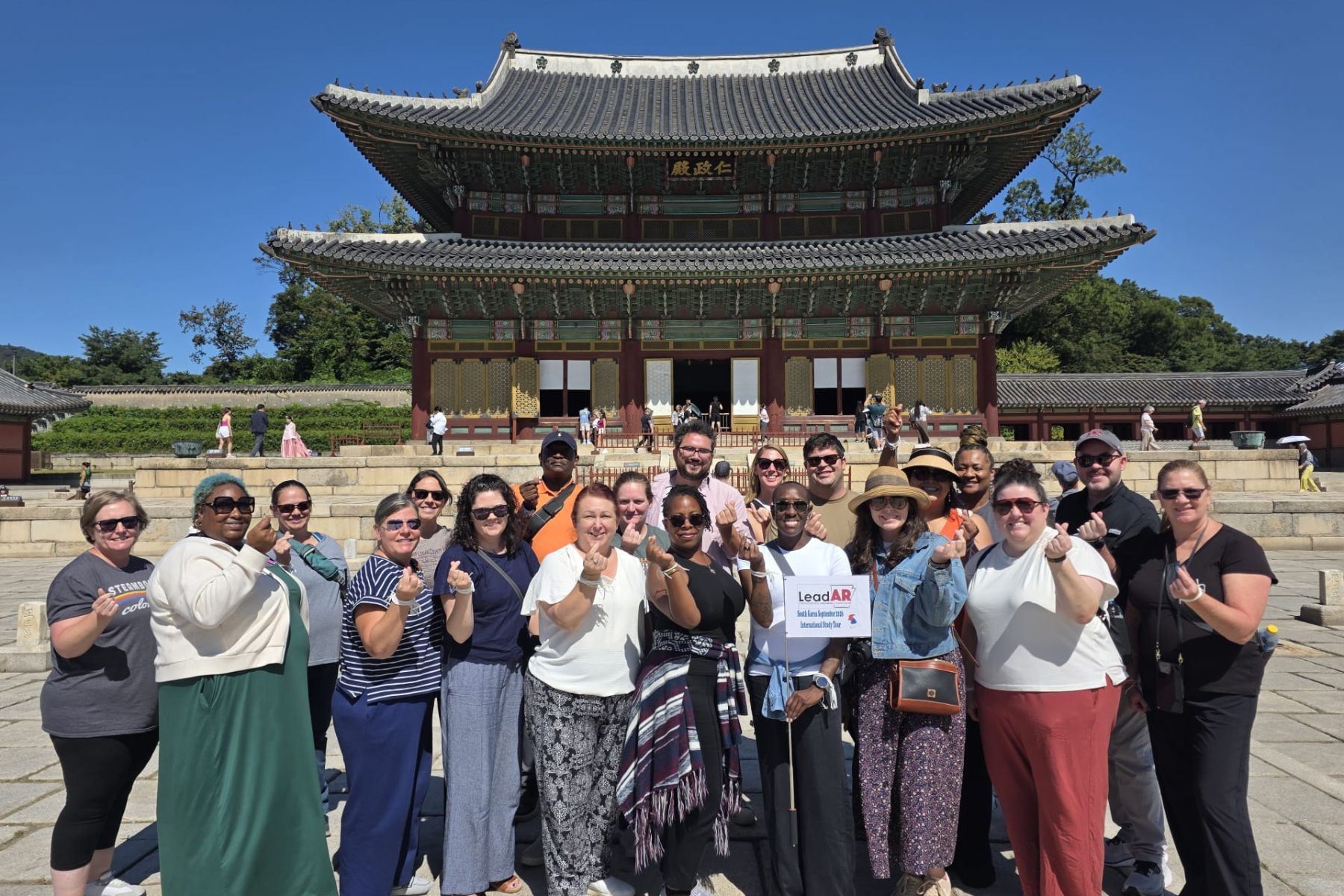 As we gathered for our LeadAR International Study Tour debrief, one theme continued
to rise to the surface: appreciation.
Each of us returned from Laos and South Korea with different perspectives, experiences, and takeaways, but we shared a common sense of gratitude for the opportunity to experience these two countries together.
Listening to my classmates reflect on their journeys reminded me that the value of this trip extended far beyond what we saw and learned. It was also about the people we met, the relationships we built, and the ways our experiences challenged us to see the world through a different lens.
One of the most interesting aspects of our discussion was hearing how each person connected with the two countries in a unique way. Some of us were struck by the contrast between Laos and South Korea, while others focused on the similarities in their challenges and goals. Each country differs significantly in their resources, technology, traditions, and approaches to agriculture, yet both are working toward sustainable food systems and greater self-sufficiency. Laos relies heavily on traditional, human-led farming practices, while South Korea has embraced technology and innovation to advance its agricultural systems. Seeing these contrasting approaches firsthand reinforced the importance of understanding that there is no one solution to the challenges facing agriculture. Every country must find ways to build on its strengths to address its own needs and circumstances.
Our discussion also highlighted the lasting effects of history and foreign influence in both countries. The unexploded ordnance (UXOs) that remain in Laos and the lasting impacts of the Korean War and the Demilitarized Zone in South Korea were reminders of how past conflicts continue to affect communities today. Several classmates expressed an interest in learning more about the history of these countries, including the influence of the U.S. and Western culture and the events that helped shape their development.
Culture and tradition were also recurring topics throughout the debrief. Classmates discussed how deeply rooted traditions, religious beliefs, and cultural practices remain part of everyday life in both countries. We were truly able to see how different cultures preserve their identities while continuing to evolve.
Several classmates commented on the welcoming nature of the people they encountered and the strong sense of community. Paul and Gwany, our Lao and South Korean travel guides respectively, shared deeply personal experiences that made it more than just a tour. Rather than simply visiting destinations as tourists, we were challenged to ask questions, engage with local people, and consider how each experience connected to our roles as agricultural and community leaders. Our classmate Vivian Brittenum made friends with the kiddos wherever we went. Several of our classmates were able to attend a cooking class hosted in a local home. Derek Ingram shared that each country felt like a family; everyone was so supportive and helpful, not just to us, but to each other.
Beyond the connections we made with the people and cultures of Laos and South Korea, many classmates reflected on the value of experiencing these moments together. For some, the trip was a once-in-a-lifetime opportunity, maybe their first time leaving the United States, and lifted a barrier to international travel. For all of us, it meant stepping outside our comfort zones, trying unfamiliar foods, and taking part in new (old) traditions like the Baci ceremony. From sharing new experiences to navigating unfamiliar environments, these moments brought us closer as a class and created memories we will carry with us long after the LeadAR program ends.
As the discussion shifted toward our upcoming graduation, I reflected on how quickly the LeadAR experience has passed. Our time together has included much more than our study tours. Between our classroom sessions, group activities, and conversations along the way, we leave LeadAR not only as stronger leaders, but as a connected community of lifelong friends who will continue to learn from, support, and inspire one another long after our graduation day.