Posts
Contact
Lisa Davis
Program Associate-Leadership
Phone: 501-671-2260
Email: ldavis@uada.edu
University of Arkansas Division of Agriculture
Cooperative Extension Service
2301 S. University Avenue
Little Rock, AR 72204
From Conflict Resolution to Conservation: Inside UADA’s Impact in Arkansas County and Beyond
 During Cohort V’s day two of our third seminar in southeast Arkansas, our topics were
implementation of TKI conflict management tools, the Arkansas County Extension offices,
and the Five Oaks Research and Education Center.
During Cohort V’s day two of our third seminar in southeast Arkansas, our topics were
implementation of TKI conflict management tools, the Arkansas County Extension offices,
and the Five Oaks Research and Education Center.
Thomas-Kilmann Conflict Mode Instrument (TKI) Assessment Tool Results
Dr. Julie Robinson’s presentation helped me to see why using other TKI conflict modes can help me be more effective in conflict resolution.
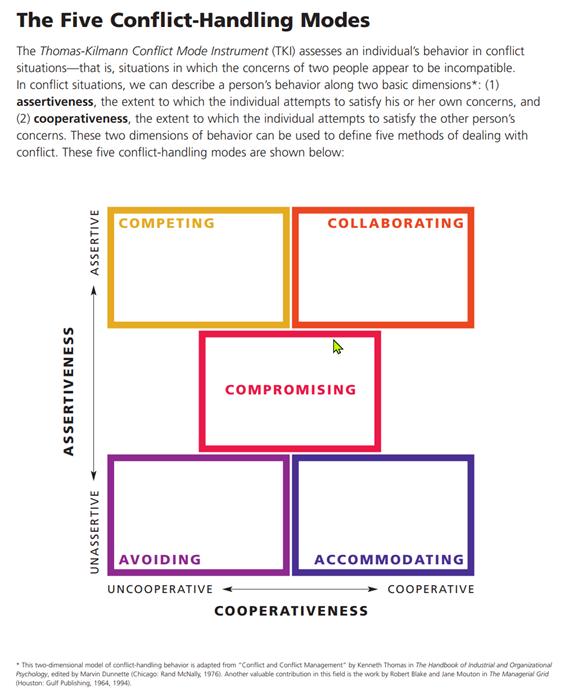
One mode is not better than the other, they all serve a purpose. My go-to conflict-handling mode can be very effective in some instances, but not in all circumstances. To improve, I want to challenge myself to really listen, to clarify by asking questions, to repeat back what I think they said to see if I understood, and I feel that it helps to “read the room” so to speak. I want others to hear and see me when conflict happens, so I want to do the same for them.
Arkansas County Extension Office
Grant Beckwith, county extension agent – staff chair, and Phil Horton, also a county extension agent, met with us to discuss the services they provide for Arkansas County and how import conflict management skills are in their daily community service. Arkansas County is one of two counties within the University of Arkansas Division of Agriculture (UADA) that has two county offices. Why? Because early on in its history it was decided based on their size and landscape complexity that Arkansas County could better service its community by having offices in Dewitt and Stuttgart. Clay County is the other county with offices in Corning and Piggott.
County extension personnel provide a multitude of community programs and services. They must have ninja-like conflict resolution skills to handle personality conflicts that arise when people interact and conflicts when the well-being of a community’s families and businesses are impacted by economic and environmental events. Extension county professionals are an extension of their communities; they are trusted professionals and friends who often stand in the gap to help by providing community programs and services, share results from our neutral science-based research, or provide emotional support by being a listening ear. County extension personnel are often unsung heroes in my opinion.
Five Oaks Agriculture Research and Education Center (FOAgREC)
Dr. Ryan Askren, FOAgREC director, told us about their new education center and the research he does there. The center provides unique waterfowl learning opportunities for their community and for waterfowl adjacent college majors to participate in habitat research on waterfowl in their natural environment. Askren shared fascinating facts from his FOAgREC research about waterfowl, how he and his team can track waterfowl across the United States. I learned about the importance of waterfowl habitats to their survival, health, and wellbeing. And to our economy, since Arkansas County is said to be the “Duck Capital of the World."
Conclusion
UADA is a vital component to the health and wellbeing of our cities and counties, because we provide valuable tangible and intangible resources and services that help add value to families and businesses in our communities. These valuable educational seminars help me to see our statewide and individual impact on those we serve.