Whooping Cough in Our Communities: What Families Should Know
Contact
AR-OK Regional Extension Immunization Educator
Phone: (501) 671-2027
Email: hwingo@uada.edu
University of Arkansas Division of Agriculture
Cooperative Extension Service
2301 S. University Ave.
Little Rock, AR 72204
Whooping Cough in Our Communities: What Families Should Know
Heather K. Wingo
February 13, 2026
You may be hearing more about whooping cough, also called pertussis, in the news or from local health departments. Cases of this highly contagious disease have been increasing in parts of the United States, including areas of Arkansas and Oklahoma. While pertussis is often thought of as a childhood illness, it can affect people of any age, and it can be especially dangerous for babies.
What is whooping cough?
Whooping cough is a bacterial infection caused by Bordetella pertussis. It spreads
through the air when an infected person coughs or sneezes, making it very easy to
pass from person to person.
The infection causes severe coughing spells that can make it hard to breathe, eat, or sleep. In some cases, the cough ends with a high-pitched “whoop” sound as the person gasps for air. However, not everyone has the classic “whoop.” Early symptoms may look like a common cold, which makes it easy to spread before anyone realizes it’s whooping cough.
Why is whooping cough a concern right now?
Recent national data show that whooping cough cases have increased, with more than six times as many reported in 2024 as in 2023.
State health departments in Arkansas and Oklahoma have also reported rising case counts, which is why public health officials are encouraging communities to stay alert and up to date on vaccinations.
See where cases are…
- Arkansas – https://adhcancer.arkansas.gov/Documents/Pertussis_public.html
- Oklahoma - https://oklahoma.gov/health/health-education/acute-disease-service/viral-view.html
Who is at risk the most?
Anyone can get whooping cough, but some groups are more likely to have severe illness:
- Infants under 6 months – this group is most likely to be hospitalized or die from whooping cough.
- Pregnant mothers who are not vaccinated during pregnancy.
- Older adults whose vaccine protection has worn off.
In many cases, babies get whooping cough from parents, siblings, or caregivers who didn’t realize they were infected.
What are the symptoms?
Whooping cough usually develops in stages:
- Runny nose
- Sneezing
- Mild cough
- Low fever
- Rapid coughing fits
- “Whooping” sound when breathing in
- Vomiting after coughing
- Trouble catching breath
- Cough slowly improves
- Symptoms may return with other respiratory infections
Adults may only have a long-lasting cough, but they can still spread the disease to others.
What complications can happen?
Complications are most common in young infants and may include:
- Pneumonia
- Seizures
- Breathing problems
- Hospitalization
- Death in severe cases
Older children and adults can also experience complications such as pneumonia or even rib fractures from severe coughing.
How is whooping cough treated?
Doctors usually prescribe antibiotics to treat pertussis. Early treatment can:
- Make the illness less severe
- Reduce the time someone is contagious
- Help prevent spreading to others
However, once severe coughing begins, medicines do not usually stop the cough itself.
How can it be prevented?
The most effective way to prevent whooping cough is vaccination.
- DTaP for infants and young children (series starting at 2 months)
- Tdap booster for:
- Preteens (11-12 years)
- Adults who haven’t received it
- Pregnant mothers during each pregnancy
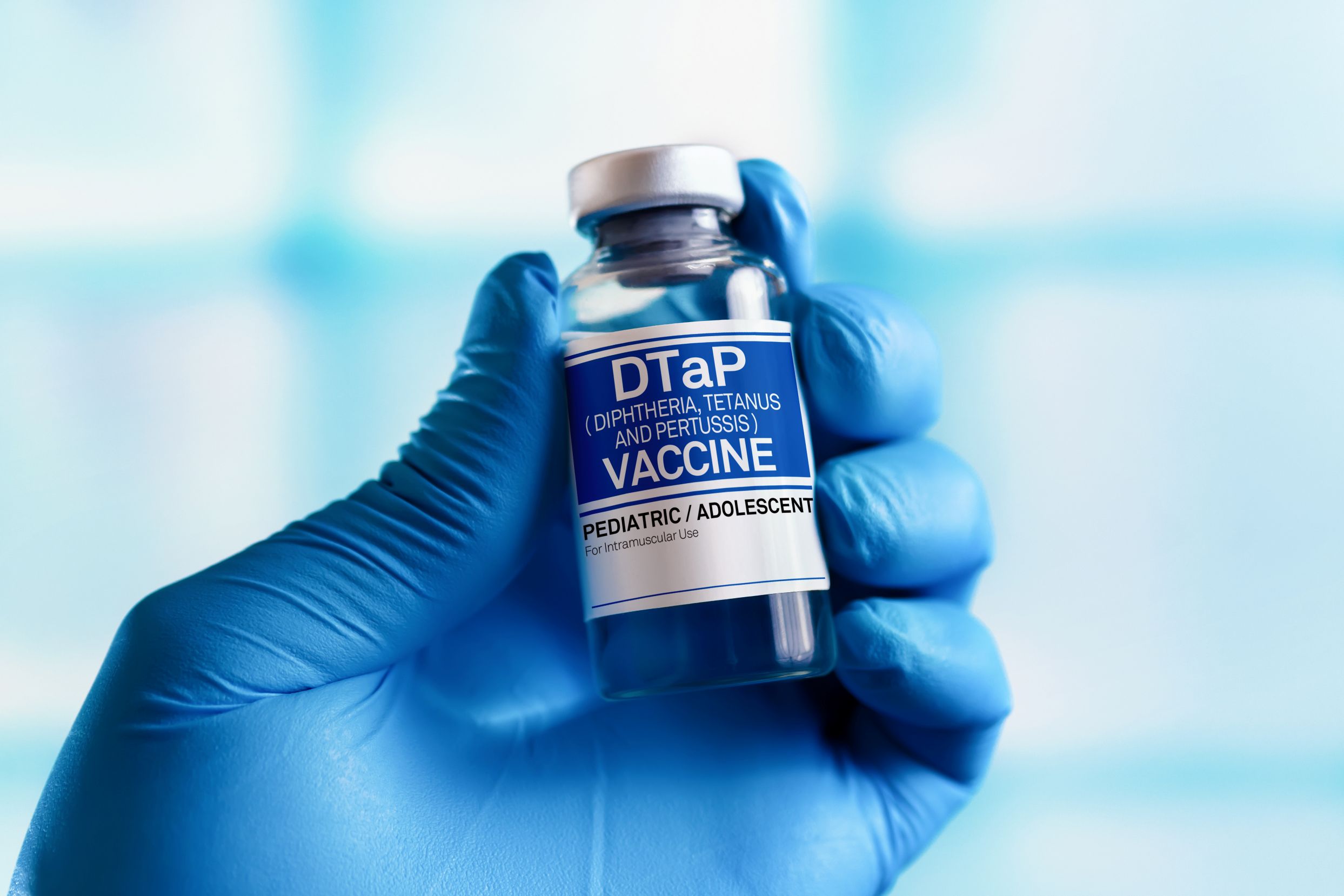
Vaccination during pregnancy can reduce a baby’s risk of pertussis in early infancy by about 90%. Booster shots are needed throughout life because protection decreases over time.
See the American Academy of Pediatrics childhood vaccine recommendations here.
The bottom line
Whooping cough is a highly contagious bacterial infection that spreads easily through coughing and sneezing. It can cause severe coughing fits and is especially dangerous for babies. Cases have been increasing in parts of the U.S., including Arkansas and Oklahoma. Vaccination is the best way to prevent whooping cough and protect infants, families, and communities.
If you are unsure about your vaccination status – or your child’s – talk with a healthcare provider, pharmacist, or local health department. Staying up to date on recommended vaccines helps protect not only you but also the most vulnerable people in your community.
Resources
Immunize.org. (2024). Pertussis (whooping cough): Questions and answers. https://www.immunize.org/wp-content/uploads/catg.d/p4212.pdf
KidsHealth. (n.d.). Whooping cough (pertussis). Nemours Children’s Health. https://kidshealth.org/en/parents/whooping-cough.html
National Foundation for Infectious Diseases. (n.d.). Whooping cough (pertussis). https://www.nfid.org/infectious-disease/whooping-cough/
Arkansas Department of Health. (n.d.). Pertussis public information. https://adhcancer.arkansas.gov/Documents/Pertussis_public.html
Oklahoma State Department of Health. (n.d.). ViralView: Acute disease surveillance. https://oklahoma.gov/health/health-education/acute-disease-service/viral-view.html