Posts
Contact
Frank Seo
Assistant Professor-CPED
Phone: 501-671-2083
Email: fseo@uada.edu
University of Arkansas Division of Agriculture
Cooperative Extension Service
2301 S. University Avenue
Little Rock, AR 72204
Arkansas Soars But Its Workforce Can’t Keep Up
Arkansas is experiencing significant economic growth, marked by record gross domestic product increases and a historic decline in regional unemployment. However, the state faces a critical challenge: a widening gap between job availability and workforce capacity.
Arkansas Breaks Old Patterns
The 2025 Arkansas Rural Profile highlights that Arkansas regional unemployment gap has dropped to a historic low (Figure 1). For decades, rural counties have struggled with higher unemployment than their urban counterparts, sometimes exceeding urban rates by over 50 percent in the late 1990s, especially in the Delta region. During the 2000s, the gap often ranged from 30 to more than 60 percent, although some regions saw improvement by the end of the decade. By 2023, however, the landscape had changed dramatically. All rural areas, Delta, Coastal Plains, and Highlands, reported unemployment rates between 3.5 and 3.7 percent, just slightly above the 3.3 percent rate in urban areas. So the question must be asked: What is going on in Arkansas?
Figure 1. Unemployment Rates by Regions in Arkansas, 1990-2023 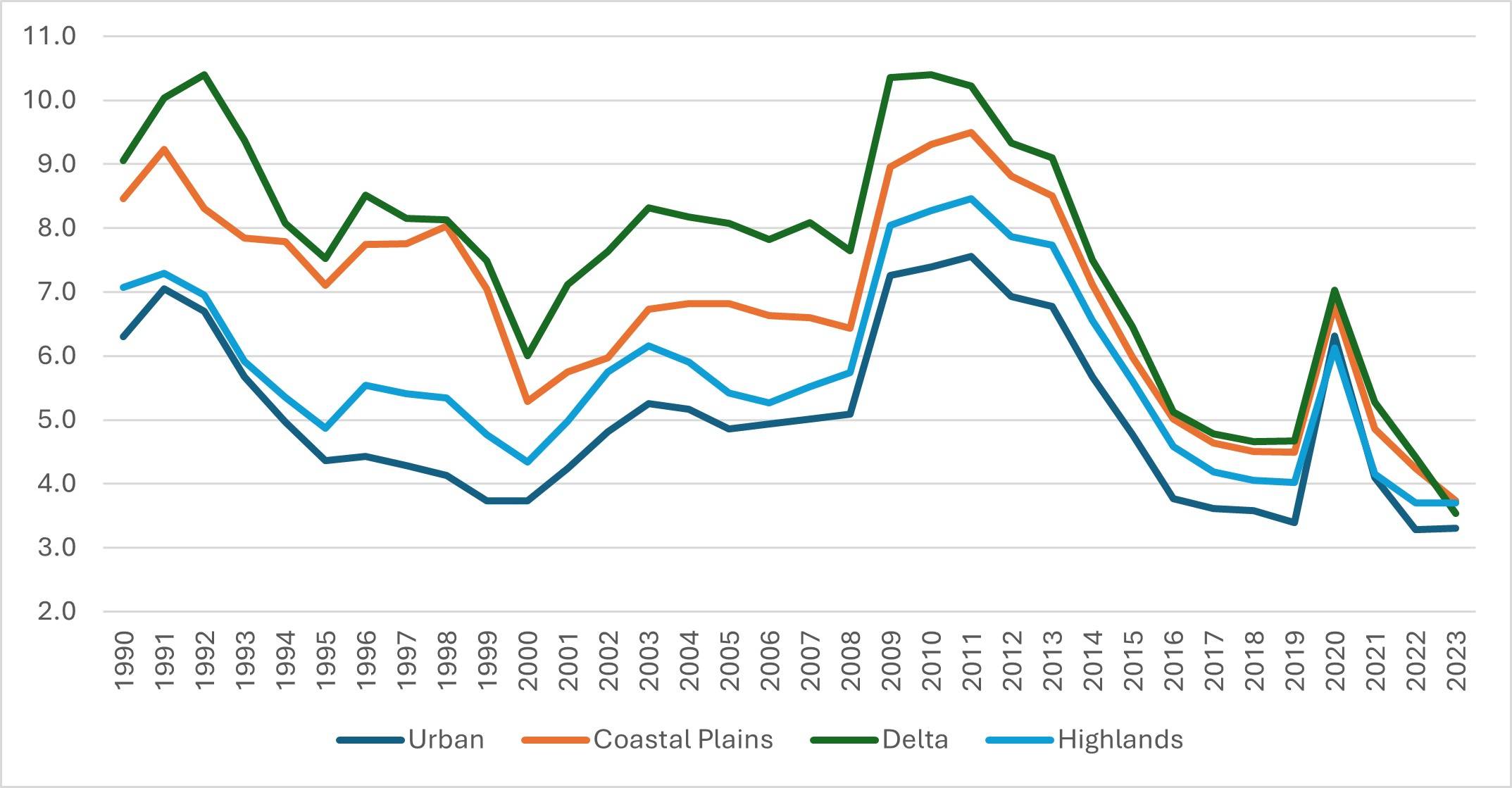 Source: 2025 Rural Profile of Arkansas, University of Arkansas Division of Agriculture
Note: Data are not seasonally adjusted.
Arkansas Shocks the Nation with Record Growth
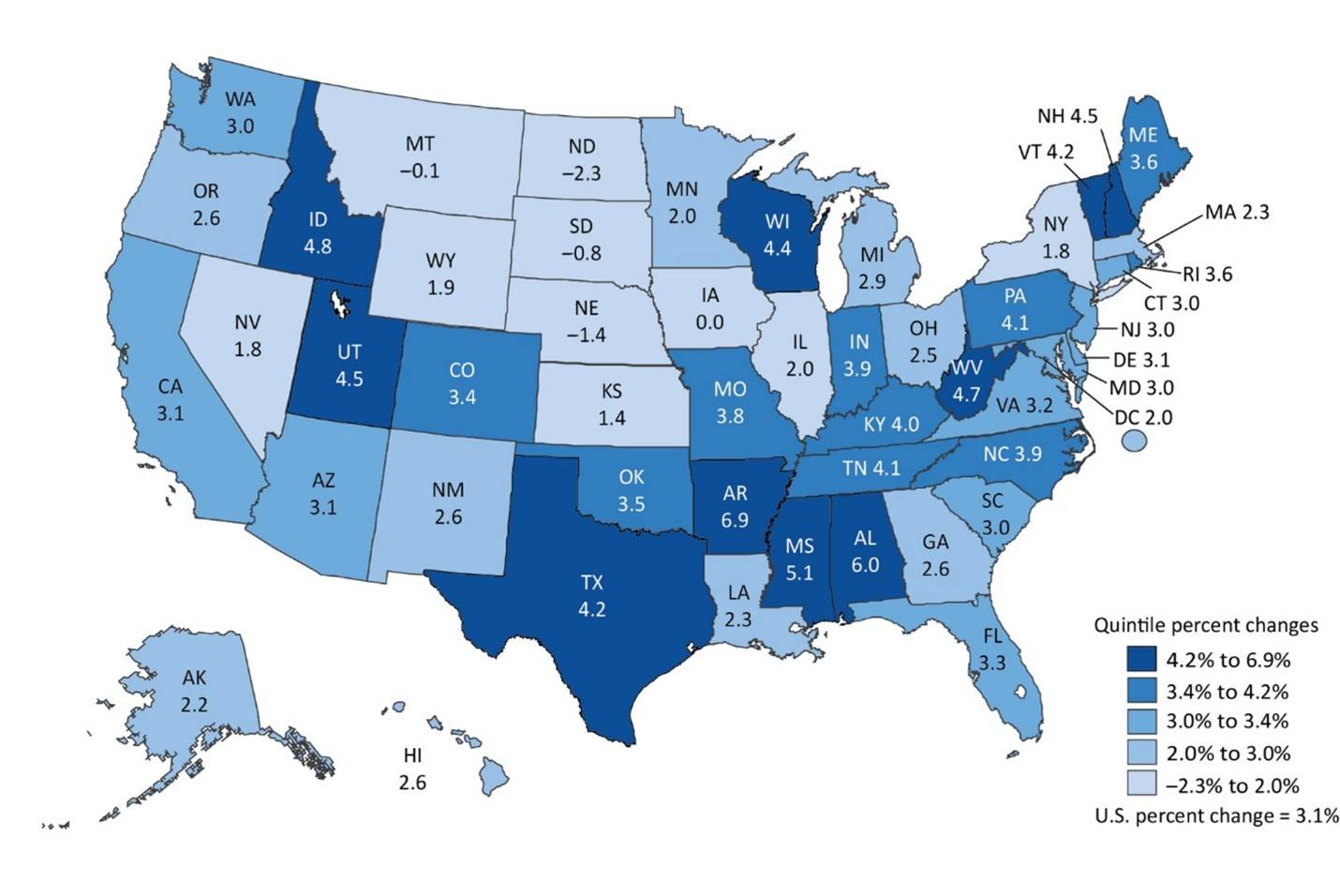
In the third quarter of 2024, the state’s real gross domestic product (GDP) surged at an annualized rate of 6.9%, which is the fastest of any state in the nation (Figure 2). This rapid growth was largely driven by agriculture, forestry, fishing and hunting industries (BEA, 2024).
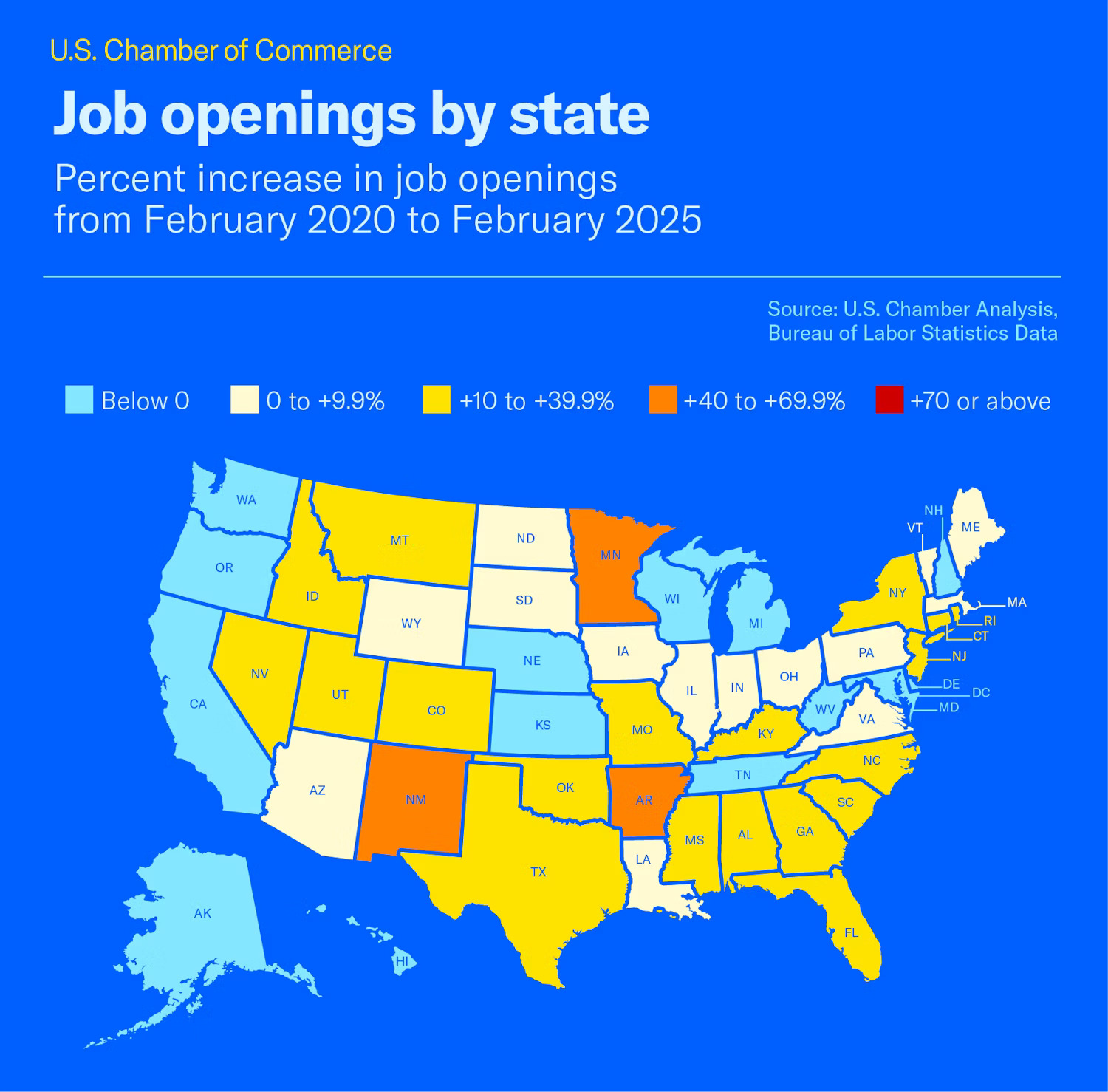
Meanwhile, the state’s job opening rate has climbed steadily from 2020 to 2025, placing Arkansas among the top states for job availability (Figure 3). This rapid economic expansion helps explain why the regional unemployment gap has narrowed so significantly. Arkansas’ economy is growing so quickly that the workforce is struggling to keep pace.
Figure 2. Real GDP Percentage Change at Annual Rate, 2024: Q2 – 2024: Q3
 Source: U.S. Bureau of Economic Analysis, 2024
Figure 3. Job Opening by State from Feb. 2020 to Feb. 2025
 Source: U.S. Chamber of Commerce, 2025
Jobs Are Plentiful, but Workers Are Not
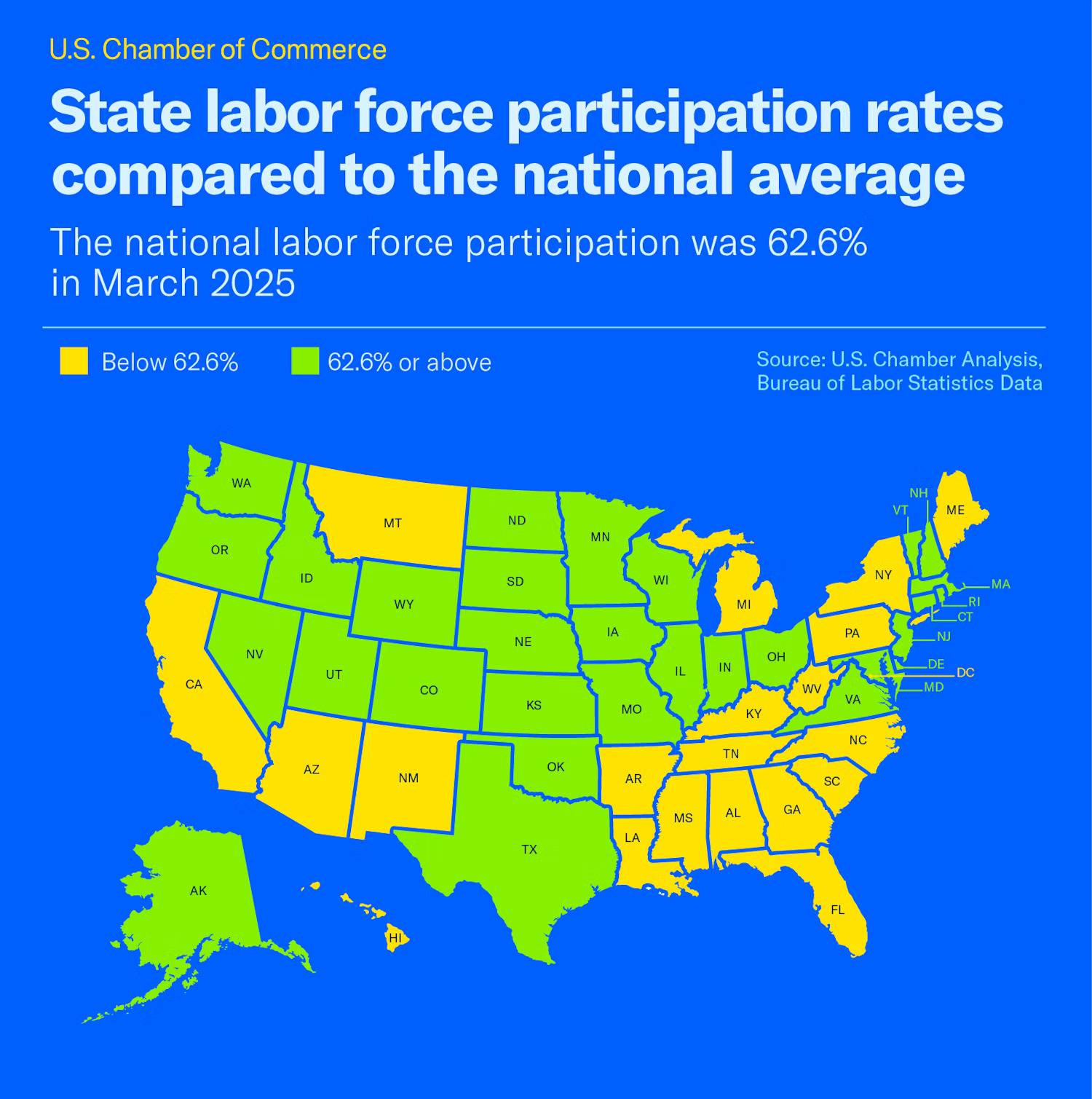
Currently, Arkansas has about 70,000 open jobs, but only 52,219 unemployed individuals actively seeking work. While employers are hiring at a steady 3.8% rate, many businesses are finding it difficult to fill positions quickly enough to match the surging economy. As a result, the state’s labor force participation rate in 2025 remains below the national average (Figure 4). This growing workforce gap raises an important question about whether Arkansas' workforce can keep up with this extraordinary economic boom.
Figure 4. State Labor Force Participation Rates Compared to the National Average, March 2025
 Source: U.S. Chamber of Commerce, 2025
Community Development Work Becomes Crucial to Sustain Arkansas’ Growth
Arkansas’ current rapid economic growth makes community development efforts more important than ever to ensure this momentum continues. Extension services, local workforce programs, and community organizations are key to this effort by expanding training in high-demand skills and connecting job seekers with employers through focused outreach.
Arkansas stands at a pivotal moment of economic promise, marked by record-low unemployment, strong GDP growth, and narrowing regional unemployment disparities. The challenge now is ensuring there are enough skilled workers to keep the economy moving forward so every part of the state can benefit from this period of exceptional growth. That is why community development efforts are more important than ever.
References
Cates, L., & Melhorn, S. (2024, December 13). Understanding America’s labor shortage: The most impacted states. U.S. Chamber of Commerce. (Updated May 23, 2025). https://www.uschamber.com/workforce/the-states-suffering-most-from-the-labor-shortage?state=
Seo, F., & Goodman, M. (2025). 2025 Rural Profile of Arkansas. Cooperative Extension Service, University of Arkansas Division of Agriculture.
U.S. Bureau of Economic Analysis. (2024, December). Gross domestic product by state and personal income by state: 3rd quarter 2024 [Press release]. U.S. Department of Commerce. https://www.bea.gov/news/2024/gross-domestic-product-state-and-personal-income-state-3rd-quarter-2024