From mule teams to precision agriculture: Lon Mann Cotton Research Station turns 100
Oct. 28, 2026
By John Lovett
University of Arkansas Division of Agriculture
Fast Facts
- Founded in 1926 as the Cotton Branch Station in Marianna
- One of Arkansas’ first three agricultural research stations
- Home of the Marianna Soil Testing and Research Laboratory
(2,118 words)
Download historical PHOTOS of the Lon Mann Cotton Research Station
MARIANNA, Ark. — On the wind-swept plains of the eastern Arkansas Delta, bordering the hills of Crowley’s Ridge, sits an agricultural research station that has witnessed generations of Arkansas farming through periods of prosperity, hardship and transformation.

That history reached a milestone this year as the Lon Mann Cotton Research Station celebrated its 100th anniversary. It is one of the first three research stations commissioned by the Arkansas Agricultural Experiment Station, the research arm of the University of Arkansas Division of Agriculture, to foster innovation and adaptation to the evolving demands of growing food and fiber in the state's unique soil types and environments.
Humble beginnings
In 1926, researchers at the new experiment station worked from a brick residence and office, maintained mule teams and planted test plots in the Delta’s sandy loam cotton belt.
A century later, what began as the Cotton Branch Station has grown into a 655-acre research complex with more than 500 irrigated acres, advanced laboratories, modern harvesting equipment and research programs that influence agricultural production across Arkansas and beyond.
Joe McAlee, resident director of the Lon Mann Cotton Research Station, said the station was established during a transformative period in Arkansas agriculture, when research conducted outside the university’s Fayetteville campus often took place on rented land. Researchers frequently moved from one location to another as leases expired, making it difficult to conduct long-term studies on crops, soils and production systems.
Recognizing the need for permanent research facilities in the state’s major agricultural regions, the Arkansas General Assembly authorized three branch experiment stations in 1923. Funding followed in 1925, and the Cotton Branch Station was established on 160 acres south of Marianna to address the needs of the state’s cotton producers.
The two other branch stations authorized in 1923 became the Rice Research and Extension Center in Stuttgart and the Southwest Research and Extension Center in Hope. Expansions of Cotton Branch came in 1963 with the purchase of the 160-acre Brittian farm and again in 1968 with the purchase of the 335-acre Graves farm.
The Great Mississippi Flood of 1927, followed by drought and the Great Depression, devastated much of eastern Arkansas. Yet, Cotton Branch researchers like J.O. Ware and L.M. Humphrey continued testing promising cotton varieties and conducting a crossbreeding program involving more than 1,600 varieties.
By 1931, the agricultural and financial depression in Arkansas reduced university funding, and the experiment station could not undertake new scientific initiatives.
C.O. Brannen, assistant director of experiment station research and former head of the department of agricultural economics and rural sociology, issued a report in 1931 to justify continued state support of the experiment station. Brannen pointed out that state cotton growers had earned $1.6 million as a result of improved fertilizer recommendations and cotton varieties, including Arkansas 2028, Acala 31, and Arkansas Rowden 40.
When the experiment station’s state appropriation was almost eliminated, only the Hatch, Adams and Purnell Act funds kept the station functioning.
“By 1940, Arkansas agriculture, along with that of the rest of the South, showed faint signs of revival as a consequence of New Deal policies,” concludes the 1930s section of “A Century of Research: Centennial History of the Arkansas Agricultural Experiment Station, 1888-1988.”
Changing times, changing crops

Because of its dominance in the 1920s, the Cotton Branch Station was created primarily to do cotton research. Still, it quickly evolved to take on much more.
“The crops that Arkansas farmers grow are dynamic,” said Nathan Slaton, associate vice president for agriculture and associate director for operations of the Arkansas Agricultural Experiment Station. “It changes not just with the needs, but as technology changes.”
When the station was founded, cotton was grown on about 2.8 million acres in Arkansas and expanded to over 3.5 million acres by 1930. Meanwhile, soybean production was just beginning to emerge in Arkansas. As of 2026, Arkansas planted about 520,000 acres of cotton and soybean is the state’s leading row crop, grown on more than 3 million acres annually. Soybean also accounts for the largest share of research and production acreage at the station.
Cotton research is still conducted at the Marianna station, though not as prevalent as it once was. Cotton and corn are now tied for second in the number of acres at the station, followed by peanut research plots.
In addition to the row-crop research, early Cotton Branch Station scientists also investigated irrigation, drainage, fertility, weed management, forage crops and livestock systems. In 1975, the station established its first rice research plots, reflecting the growing importance of rice production in eastern Arkansas.
Taking research to the field

In 1929, to showcase the new station and provide farmers with crop-growing guidance, the Cotton Branch Station hosted its first field day. The event drew Gov. Harvey Parnell, elected officials and farmers eager to see the latest agricultural research firsthand.
During that first field day, visitors toured cotton variety trials, pecan plantings and innovative cropping systems. They examined cotton varieties such as Arkansas Rowden plots and viewed corn intercropped with soybeans, mung beans, velvet beans and crotalaria.
The event also featured Arkansas’ first variety trial of Arksoy, a soybean grown specifically for grain production and adapted for Arkansas conditions. Developed by agronomist C.K. McClelland and released in 1928, Arksoy helped launch what would become one of Arkansas’ most valuable crops.
Fred Bourland, a professor of plant breeding and genetics in the department of crop, soil and environmental sciences, said the first field day was significant because it “showed the importance of the station to the community and the state.”

Bourland, the Altheimer Chair for Cotton Research and Development, has been involved with the station for much of its history, beginning in 1970 as a University of Arkansas graduate student under the direction of Brad Waddle, Distinguished Professor of agronomy and first Altheimer Chair for Cotton Research and Development. Bourland completed his doctorate at Texas A&M and worked as a cotton breeder at Mississippi State University before returning to Arkansas in 1988.
During those first decades at the station, cotton improvement remained a major priority, Bourland said.
Ware evaluated hundreds of varieties and breeding lines in search of plants that offered better yields, improved fiber quality, disease resistance and adaptation to Arkansas growing conditions. Farmers and researchers were also battling the boll weevil and other insects that threatened cotton production. Entomologist Dwight Isely advocated biological control practices and proper timing of chemical applications.
Early releases from Ware included Arkansas Rowden 40, Arkansas Acala 37 and Arkansas 17, varieties that gave growers improved options tailored to different regions of the state.
By helping producers adopt improved seed, researchers demonstrated how land-grant research could directly improve farm productivity.
Post-World War II Years
Work continued at Cotton Branch during World War II, but the station’s influence grew significantly after the war as manufacturing drew people from farms to cities and small farms consolidated.
Among the most important arrivals during that time, Bourland said, was Carl Moosberg, a cotton breeder who was associated with the station from 1948 to 1972, first as a senior agronomist for the U.S. Department of Agriculture, then as a research agronomist for the experiment station.
Moosberg’s breeding work led to the development of influential varieties including Arkot 2-1, Rex, Rex SL 66, Stripper 31 and Quapaw. The Rex variety was introduced in 1957 and reduced pesticide expense by shortening maturity time, while offering disease resistance and stronger fiber.
The breeding program established during that era helped build Arkansas’ reputation for cotton research, a legacy that continues today. Later generations of breeders, including Bourland, strengthened that reputation through advances in yield potential, fiber quality and adaptation to Mid-South growing conditions.
A hub for soil testing and nutrient research
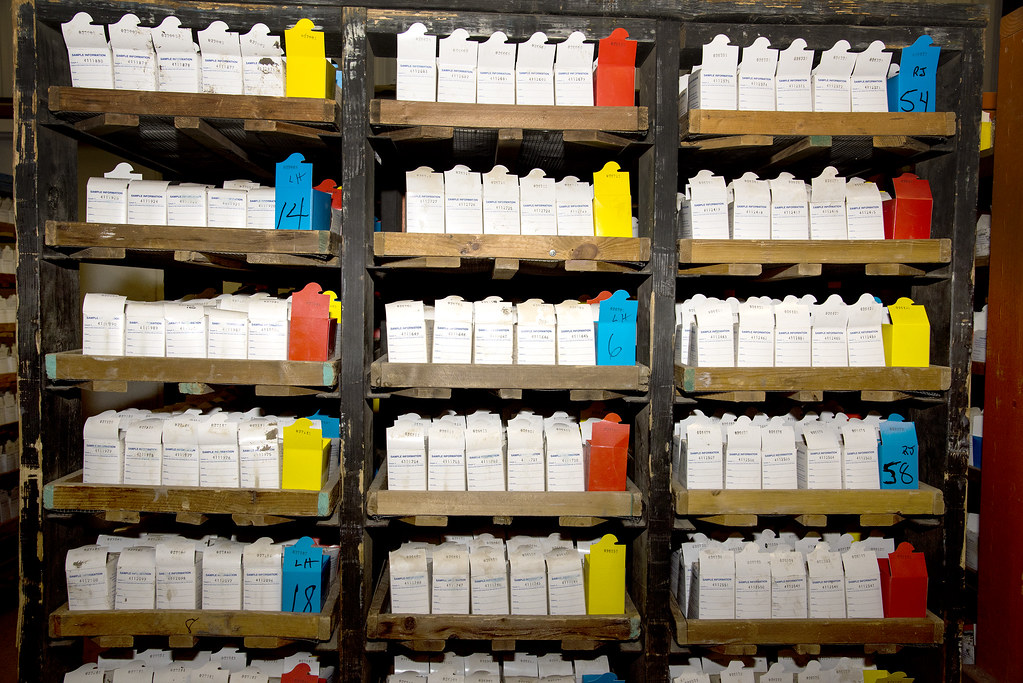
The station is also home to the Marianna Soil Testing and Research Laboratory, which processes up to 200,000 samples each year from farmers across the region. Soil testing helps determine fertilizer needs and improve productivity in crops, pastures, lawns and gardens. Since soil testing began there in 1954, the lab has logged more than 5.8 million samples.
By the early 1950s, Arkansas farmers increasingly relied on soil testing to make fertilizer decisions. Demand for those services threatened to overwhelm facilities in Fayetteville. The response was the creation of the Marianna lab, which opened on July 1, 1954, and quickly became one of the most important resources available to producers across eastern Arkansas, Slaton said. In addition to testing samples, the lab contributes to research aimed at improving lime and fertilizer recommendations.
“The 1950s were a time across the United States and Arkansas when the discipline of soil testing was really just gaining legs,” Slaton said.
New fertilizer technologies were becoming widely available, and growers increasingly relied on laboratory analysis to guide fertilizer decisions, he added.
The Marianna lab served eastern Arkansas producers, and a companion laboratory in Fayetteville served the western half of the state. While the Marianna lab now serves all of Arkansas for routine analysis, the Fayetteville lab has a different mission and no longer performs free routine analysis for farmers. Both labs, however, remain vital links between agricultural research and farm management decisions aimed at improving profitability and environmental stewardship.
Generations of leadership take root
As Arkansas agriculture evolved, the station met the changing needs of the farmers it served and became a training ground for future agricultural leaders.
Among those who spent part of their careers at the Cotton Branch Station were John W. White, who later became the university’s vice president for agriculture. Many researchers, technicians, field staff, extension specialists and graduate students gained experience at the station before moving into leadership roles throughout the agriculture industry.
Equally important were the people whose names rarely appeared in scientific journals, McAlee noted. Farm managers, mechanics, equipment operators, laboratory technicians and support staff helped transform research plans into results. Their daily efforts helped produce discoveries that eventually benefited farms throughout the region.
Improving irrigation and technology

Few examples better illustrate the station’s transformation than irrigation and mechanization, said Bourland, who credited former Cotton Branch Station resident director Claude Kennedy and others in expanding irrigated acreage at the station from roughly 80 acres to more than 500 acres.
As research expanded and crop production intensified across the Delta, irrigation research became increasingly important for economic and conservation purposes. The irrigation expansion helped reposition the station from a relatively small operation into one capable of supporting more than 10,000 research plots each year.
Researchers also use technologies that would have seemed unimaginable to the station’s founders. Information from experiments is collected and stored electronically, and sophisticated harvesting equipment gathers cotton in a single pass while forming wrapped modules in the field.
Last year, the experiment station funded the purchase and retrofit of a modern round-module cotton picker with a specialized plot-weighing system, significantly increasing research efficiency.
“It allows us to get the crop out a little quicker,” McAlee said. “If we can get it out a little quicker, we can increase our acreage so we can do more.”
Advances in genetics, computing and precision agriculture also allow scientists to answer questions with a level of accuracy that would have been impossible a century ago, McAlee added.
Station renamed in honor of Lon Mann
In 2005, the station entered a new chapter.
A new headquarters, the Dan Felton Jr. Building, opened on the grounds, and the facility was renamed the Lon Mann Cotton Research Station. Felton was a prominent local civic leader, planter, merchant and ginner.
The honors also recognized Alonzo “Lon” Mann, a Lee County farmer, ginner and nationally respected agricultural leader. During his career, Mann served as president of the National Cotton Council, National Ginners Association, Mid-South Ginners Council and Agricultural Council of Arkansas. His leadership earned recognition in both the Arkansas Agricultural Hall of Fame and the Cotton Research and Promotion Program Hall of Fame.
The renaming reflected the close relationship between research, industry and producers that has defined the station since its beginning.
Looking toward the next century

The challenges confronting agriculture today differ dramatically from those faced by the station’s founders, but adaptation remains the key to long-term success.
“If everybody were still farming like it was 20 years ago, there would be no point in us being here,” McAlee said. “Nobody’s farming like they were 20 years ago.”
Researchers are increasingly studying sustainability practices, precision agriculture technologies and automated systems like GPS-guided equipment, drones and targeted spraying technologies.
Slaton believes future advances may include autonomous machinery capable of performing many tasks with minimal operator input.
“What does autonomous agriculture look like?” Slaton said. “Maybe in another 20 years we’ll have tractors that are operating from an iPad.”
Today, while things may look different from the mule-powered operation established in 1926, the station’s purpose remains unchanged: helping Arkansas farmers solve problems and adapt to change.
To learn more about ag and food research in Arkansas, visit aaes.uada.edu. Follow the Arkansas Agricultural Experiment Station on LinkedIn and sign up for our monthly newsletter, the Arkansas Agricultural Research Report. To learn more about the Division of Agriculture, visit uada.edu. To learn about extension programs in Arkansas, contact your local Cooperative Extension Service agent or visit uaex.uada.edu.
About the Division of Agriculture
The University of Arkansas Division of Agriculture’s mission is to strengthen agriculture, communities, and families by connecting trusted research to the adoption of best practices. Through the Agricultural Experiment Station and the Cooperative Extension Service, the Division of Agriculture conducts research and extension work within the nation’s historic land grant education system.
The Division of Agriculture is one of 22 entities within the University of Arkansas System. It has offices in all 75 counties in Arkansas and faculty on three system campuses.
Pursuant to 7 CFR § 15.3, the University of Arkansas Division of Agriculture offers all its Extension and Research programs and services (including employment) without regard to race, color, sex, national origin, religion, age, disability, marital or veteran status, genetic information, sexual preference, pregnancy or any other legally protected status, and is an equal opportunity institution.
# # #
Media Contact:
John Lovett
U of A Division of Agriculture
Arkansas Agricultural Experiment Station
(479) 763-5929
jlovett@uada.edu